
The math is straightforward: acquiring a new customer costs five times more than keeping an existing one, and Bain's research shows that a 5% increase in retention can raise profits by 25%–95%. Yet most small e-commerce businesses have no real engagement strategy beyond the occasional promotional email blast.
This guide covers 14 customer engagement strategies that any online business owner can implement — regardless of experience level or budget — to build loyalty, increase repeat purchases, and grow sustainable revenue.
Key Takeaways
- Customer engagement is about building meaningful relationships across every touchpoint, not just the moment of purchase
- Engaged customers buy more often, spend more per order, and refer new buyers
- The 14 strategies here cover the full engagement cycle — from personalization and loyalty programs to email, social media, and customer support
- Track revenue-linked metrics like customer lifetime value, repeat purchase rate, and net promoter score — not just clicks and follows
- Start with two or three strategies, measure results, then expand
What Is a Customer Engagement Strategy?
A customer engagement strategy is a structured plan for how a business interacts with customers at every stage of their journey — from first discovery through repeat purchase and advocacy.
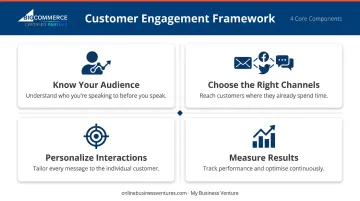
It goes well beyond running a discount. The core building blocks are:
- Know your audience — understand purchase behavior, preferences, and pain points
- Choose the right channels — email, social media, live chat, or community spaces
- Personalize interactions — tailor messaging to where each customer is in their journey
- Measure results — track metrics that connect engagement to revenue, not just activity
For small e-commerce businesses, the strategies below are designed to be practical — each one targets a specific point in the customer journey where attention drives real revenue.
14 Customer Engagement Strategies to Increase Revenue
These strategies are organized to move customers from first-time buyers to loyal advocates. Each one is practical for entrepreneurs running online stores.
1. Personalize the Customer Experience
Personalization means tailoring product recommendations, emails, and on-site content to individual behavior and purchase history — not sending the same generic message to everyone.
McKinsey research found that fast-growing companies derive 40% more revenue from personalization than slower-growing peers, with 78% of consumers more likely to repurchase after receiving personalized content.
Even basic personalization makes a measurable difference:
- Recommend related products after a purchase
- Send birthday or anniversary offers
- Surface recently viewed items on return visits
- Segment post-purchase emails by product category purchased
Start small. "Customers who bought this also bought..." is personalization. You don't need sophisticated AI on day one.
2. Build a Customer Loyalty and Rewards Program
A points-based or tiered rewards program gives customers a reason to come back beyond the product itself. According to Yotpo's 2023 survey of 3,800 consumers, more than 83% said loyalty programs influenced their decision to buy again.
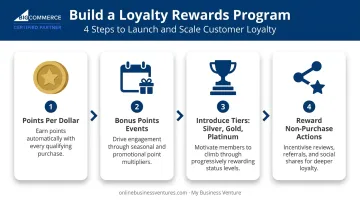
Simple implementation steps:
- Offer points per dollar spent, redeemable for store credit or discounts
- Add a "bonus points" event (double points weekends, birthday multipliers)
- Introduce tiers (Silver, Gold, Platinum) as the program matures
- Reward non-purchase actions — reviews, referrals, social shares
Children's apparel brand June & January saw a 47% increase in repeat purchase rate after enhancing its points-based loyalty program — a useful benchmark for what structured incentives can achieve.
3. Use Social Media for Two-Way Engagement
Posting promotions is broadcasting. Actual engagement is different — it's responding to comments, running polls, sharing customer photos, and celebrating buyers publicly.
The stakes are real: 73% of consumers say they will switch to a competitor if a brand ignores their inquiries on social media, according to Sprout Social's research.
Practical two-way engagement tactics:
- Respond to every comment and DM within 24 hours
- Repost customer photos featuring your products (with permission)
- Run polls to involve customers in product decisions
- Spotlight a customer of the week
MBV's Millennium package includes a Social Media Upgrade with managed channel setup and regular custom content — a practical starting point for entrepreneurs who want a professional social presence from day one without handling it all themselves.
4. Use Personalized Email Marketing Automation
Batch-and-blast emails — the same message sent to your entire list — are the least effective form of email marketing. Behavior-triggered emails sent at the right moment consistently outperform them.
Klaviyo's 2026 benchmark data from 183,000+ e-commerce customers shows that automated email flows generate nearly 41% of email revenue from just 5.3% of sends, with a click rate more than 3x higher than standard campaigns.
High-impact automated sequences to build:
- Welcome series for new subscribers (3 emails over 7 days)
- Post-purchase follow-up with usage tips or cross-sell suggestions
- Win-back campaign for customers inactive 60–90 days
- Review request 7–14 days after delivery
MBV's platform includes newsletter and email marketing capabilities, with one-on-one coaching from consultants like Kurt Higgins — who clients specifically praise for making engagement strategies easy to understand and implement.
5. Optimize the Customer Onboarding Experience
The window immediately after a first purchase is the most critical moment in the customer relationship. How you handle it determines whether they buy again.
For e-commerce, strong onboarding includes:
- A warm, branded post-purchase confirmation email (not just a generic receipt)
- Product usage tips or a quick-start guide sent 2–3 days after delivery
- A proactive check-in at day 7 asking if everything arrived as expected
- A soft invite to follow on social media or join your community
This sequence costs almost nothing to build and has an outsized impact on second-purchase rate. Most stores skip it — so the ones that don't have a clear edge on repeat buyers.
6. Recover Abandoned Carts with Targeted Follow-Ups
Cart abandonment is one of the largest revenue leaks in e-commerce. Baymard's 2025 meta-analysis of 49 studies places the average cart abandonment rate at 70.22% — meaning seven out of ten shoppers who add items to their cart never complete the purchase.
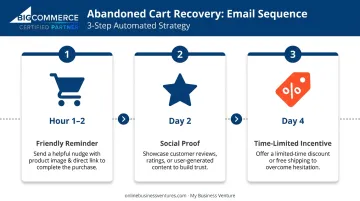
A simple 2–3 email recovery sequence works well:
- Hour 1–2: Friendly reminder ("You left something behind")
- Day 2: Include social proof — a product review or trust signal
- Day 4: Time-limited incentive (free shipping or small discount)
Klaviyo reports a 50.5% average open rate for abandoned cart emails — nearly triple standard campaign open rates. SMS or push notifications can supplement email for higher recovery rates on mobile-first shoppers.
7. Create Content That Educates and Drives Traffic
Content keeps customers engaged between purchases and builds your store's credibility as a go-to source in your niche.
For e-commerce stores, content tied to product use cases works best:
- How-to guides or tutorials featuring your products
- Comparison posts helping customers choose between options
- Short videos showing products in real-world contexts
- Blog posts answering common pre-purchase questions
The distinction that matters: genuinely helpful content vs. purely promotional content. "How to choose the right pet bed for a senior dog" drives more engagement — and more SEO traffic — than "Buy our pet beds now."
MBV includes a built-in blog and newsletter feature across all packages, plus access to a Top 100 Marketing Guide covering free and paid strategies.
8. Build a Referral Program
Satisfied customers are your most credible salespeople. A referral program structures that word-of-mouth into a repeatable, measurable channel.
Simple referral structure:
- Offer the referrer a discount or store credit for each successful referral
- Give the new customer an incentive to make their first purchase
- Automate the tracking and reward delivery
Timing matters more than most store owners realize. The best moment to ask for a referral is right after a positive experience — post-delivery, or immediately after a customer leaves a 5-star review. That's when goodwill is highest.
9. Encourage and Act on Customer Feedback
Soliciting feedback signals that you value your customers' opinions. But there's a catch: if you collect feedback and nothing changes, customers notice — and they disengage faster than if you'd never asked at all.
The "close the loop" principle: when a customer's suggestion leads to a change, tell them. A simple "You mentioned X last month — here's what we changed" email builds more trust than any promotional campaign.
Feedback collection methods:
- Post-purchase survey (1–3 questions, sent 7 days after delivery)
- NPS email (one question: "How likely are you to recommend us?")
- Review requests on Google or your product pages
- Direct reply-to email invitations in transactional messages
10. Offer Real-Time Support Through Live Chat
Live chat reduces purchase friction at the exact moment of hesitation — before a potential buyer navigates away. Ecommerce brand Lillie's Q reported a 75% increase in sales conversion after implementing Gorgias Chat to answer product and ordering questions in real time (a vendor case study, not a universal benchmark, but directionally meaningful).
For small businesses, live chat doesn't require a full support team:
- Configure automated responses for the 5–10 most common questions
- Route complex inquiries to email or phone during off-hours
- Set clear expectations ("We typically respond within 2 hours")
MBV includes Live Chat Support across all three package tiers — Enterprise, Premier, and Millennium — with U.S.-based support also available by phone at 1-800-639-6644.
11. Segment Your Audience for Targeted Messaging
Segmentation means dividing your customer list into groups based on behavior, purchase history, or lifecycle stage — then sending each group messages relevant to where they are in their journey.
Even basic segmentation beats batch-and-blast:
| Segment | Relevant Message |
|---|---|
| New buyers (0–30 days) | Onboarding tips, product guides |
| Repeat buyers (2+ orders) | Loyalty rewards, VIP access |
| Lapsed buyers (90+ days inactive) | Win-back offer, "We miss you" |
| High-spenders | Early access, exclusive products |
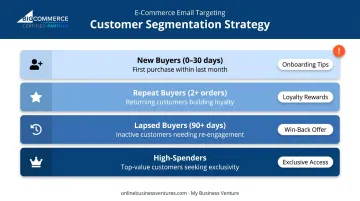
Customers who receive irrelevant messages unsubscribe. Customers who receive relevant messages buy again.
12. Use Gamification to Drive Engagement
Gamification adds game-like elements — points, badges, challenges, progress indicators — to the shopping experience to make engagement more rewarding and habit-forming.
Practical e-commerce examples:
- A milestone reward when a customer makes their 5th purchase
- A progress bar showing how close they are to the next loyalty tier
- A "complete your profile" bonus for filling out preferences
- A seasonal challenge (spend $X in November, unlock a gift)
These mechanics tap into the psychology of completion and reward. They work particularly well layered on top of an existing loyalty program.
13. Build Community Around Your Brand
A loyal community creates emotional belonging that discounts alone cannot replicate. When customers connect with each other — not just with your brand — they stay longer and refer more.
For small business owners, this doesn't require a complex platform:
- Start a private Facebook Group for customers
- Feature customer stories in your newsletter
- Create a hashtag and actively engage with posts that use it
- Host occasional live Q&A sessions or product launches
Community members buy more frequently and churn less. More than that, they defend the brand publicly — which is worth more than any paid ad.
14. Track Engagement Metrics and Optimize Continuously
Customer engagement isn't a one-time setup — it requires regular review to understand what's working and what isn't.
A practical measurement cadence:
- Weekly: Email open rates, click rates, cart recovery rates
- Monthly: Repeat purchase rate, customer lifecycle stage movement
- Quarterly: Customer Lifetime Value (CLV), retention rate, NPS score
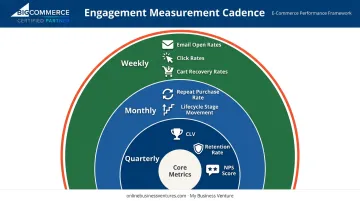
Revenue-linked reporting is what matters. Open rates are interesting; CLV tells you whether your engagement strategy is actually growing the business.
How to Measure the Success of Your Engagement Strategy
Key Metrics to Track
| Metric | What It Tells You | If It Trends Wrong |
|---|---|---|
| Customer Lifetime Value (CLV) | Total revenue per customer over time | Review your loyalty and retention tactics |
| Repeat Purchase Rate | % of customers who buy more than once | Improve onboarding and post-purchase follow-up |
| Net Promoter Score (NPS) | Likelihood customers will refer others | Identify and address your biggest friction points |
| Customer Churn Rate | % of customers who stop buying | Trigger win-back campaigns earlier |
| Email Click Rate | Engagement with email content | Test subject lines, content, and send timing |
Start with a Baseline
Before testing new strategies, record your current metrics. You can't measure improvement without a starting point. Google Analytics (built into MBV's admin portal) and your email platform's dashboard cover most of this at no extra cost.
Use A/B Testing to Improve
Test one variable at a time — subject line, send time, CTA button text — and let data guide decisions rather than guesswork. Run tests consistently, and the results will point you toward what actually moves the needle.
Common Customer Engagement Mistakes to Avoid
Avoid these three patterns before they quietly drain your engagement efforts:
- The batch-and-blast trap: Sending the same promotional email to your entire list — regardless of behavior or lifecycle stage — erodes trust, spikes unsubscribes, and trains customers to ignore you. Segmented, relevant messaging is the fix.
- Collecting feedback without closing the loop: Customers who feel ignored after giving feedback disengage faster than those who never gave feedback at all. A simple "here's what changed" message is one of the highest-ROI moves in customer engagement.
- Trying to implement everything at once: Pick two or three strategies that address your biggest current gap — usually poor onboarding, no email follow-up, or no loyalty incentive. Master those first, then expand. Consistency beats complexity every time.
Conclusion
Retained customers cost less to serve, spend more over time, and bring in new buyers through referrals. The 14 strategies in this guide give you a practical toolkit to move buyers from one-time transactions toward lasting loyalty — and lasting loyalty toward predictable revenue growth.
My Business Venture's turn-key e-commerce packages come with marketing tools, social media integration, and one-on-one business coaching built in — so you can start applying these strategies from day one. MBV University coaches, including Kurt Higgins, specialize in translating engagement concepts into concrete actions for your store.
Learn more at mybusinessventure.com or call 1-800-639-6644.
Frequently Asked Questions
What are some customer engagement strategies?
The most accessible starting points are loyalty programs, personalized email marketing, two-way social media engagement, customer feedback loops, and referral programs. These five strategies address the most common gaps — poor retention, low repeat purchase rates, and weak word-of-mouth — and can be implemented without a large budget.
What are the 5 key drivers of customer engagement?
Five core drivers shape how deeply customers connect with a brand:
- Personalization — making customers feel understood
- Trust — consistently delivering on promises
- Value — giving more than expected
- Community — connecting customers with each other and the brand
- Proactive communication — reaching out before customers have to ask
What are the 5 stages of customer engagement?
Customer engagement moves through five stages, each requiring different tactics:
- Awareness — customer discovers the brand
- Consideration — they evaluate the product
- Purchase — first transaction
- Retention — repeat engagement and buying
- Advocacy — they recommend the brand to others
What are the 5 C's of customer engagement?
The 5 C's of customer engagement are:
- Content — value-adding communication
- Community — building a sense of belonging
- Convenience — reducing friction at every step
- Consistency — reliable experiences across all touchpoints
- Customization — personalizing interactions to individual needs
How does customer engagement increase revenue?
Engaged customers buy more frequently, spend more per order, churn less, and actively refer new buyers. Bain's research found that a 5% increase in retention can raise profits by 25%–95%, depending on the business — making engagement one of the highest-ROI investments available to an online store owner.
What metrics should I track to measure customer engagement?
Track Customer Lifetime Value (CLV), Repeat Purchase Rate, Net Promoter Score (NPS), email click-through rate, and churn rate. Check leading indicators like opens and clicks weekly; review CLV and retention quarterly for the full picture.