Introduction
Selling quality products is only half the battle for new resellers. Without a distinct brand identity and a professional storefront, customers have no real reason to choose you over a competitor selling the exact same items at similar prices.
This guide covers two interconnected pillars every reseller needs to understand. Reseller branding is the identity you build — your name, logo, visual style, and customer experience. Custom control panels are the tools and platform that bring that identity to life online.
By the end, you'll know how to build a recognizable reseller brand, what a custom control panel does, which elements every branded storefront needs, and the common mistakes that sink new resellers before they gain traction.
Key Takeaways:
- 67% of consumers stay loyal to brands they trust, per Edelman's 2023 Trust Barometer
- Custom control panels give resellers full pricing, design, and customer relationship control
- Branded storefronts generate far more equity than marketplace listings
- Mobile optimization is non-negotiable: more than half of online revenue now comes from mobile
- Launching without a cohesive visual identity is the single most common reseller mistake
What Is Reseller Branding and Why Does It Matter?
Reseller branding is the process of creating a distinct business identity — name, logo, visual style, and customer experience — that represents you, not the manufacturer or supplier behind the products you sell.
This distinction matters more than most new resellers realize.
Why Branding Separates Survivors from Competitors
When many resellers sell identical products, price becomes the default differentiator. That's a race you cannot win sustainably. Your brand is what converts a one-time buyer into someone who comes back, refers friends, and forgives the occasional shipping delay.
The data on this is clear. According to Edelman's 2023 Brand Trust research of over 13,800 consumers across 14 countries:
- 88% say trust is important when choosing a brand
- 67% are more likely to stay loyal, continue buying after a mistake, and recommend a trusted brand
- 59% will buy from a trusted brand even when it isn't the cheapest option
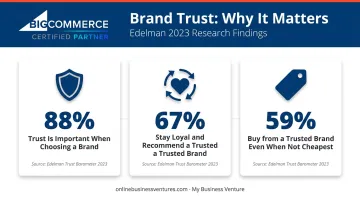
A trusted brand removes price as the deciding factor. For resellers operating on fixed wholesale costs, that's the difference between thin margins and healthy ones.
Branding Is More Than a Logo
Effective reseller branding goes well beyond slapping your name on a product. It encompasses:
- Your store's visual appearance (colors, typography, imagery)
- Tone of voice in product descriptions and emails
- Customer service reputation and response speed
- The complete buyer journey from first click through delivery
Each of these touchpoints shapes how customers perceive you. The white-label reseller model illustrates this clearly: resellers who apply their own branding — logo, store design, packaging — are perceived as independent brands. That perception supports higher price points and stronger loyalty, regardless of where the product originates.
What Is a Custom Control Panel for Resellers?
A custom control panel — also called a branded reseller dashboard or white-label storefront — is the system resellers use to manage their online store without exposing the underlying supplier or platform. It covers everything: product catalogs, pricing, orders, and the customer-facing design your buyers actually see.
How a Custom Control Panel Works
The core function is separation: your customers see your brand, your store, your experience — the supplier's identity never appears.
In practice, a control panel like this lets you:
- Display products under your own brand name and domain
- Set your own pricing and profit margins
- Present a fully designed storefront to customers
- Receive orders, review them, and trigger fulfillment with a single click
- Get automatic inventory updates as new products arrive and out-of-stock items are removed
The supplier handles warehouse logistics, packing, and shipping — often under your company name (this is blind dropshipping). Customers receive their order branded as if it shipped directly from your store.
My Business Venture (MBV), for example, uses XML technology to automatically push real-time product and inventory updates to reseller storefronts — new arrivals are added, discontinued items are removed, all without the reseller lifting a finger.
White-Label vs. Generic Storefronts
That kind of control is exactly what separates a custom panel from a generic marketplace listing. The core distinction is ownership.
| Feature | Custom Control Panel | Marketplace Listing (eBay/Amazon) |
|---|---|---|
| Brand identity | Fully yours | Platform's brand dominates |
| Customer data access | Retained by reseller | Restricted by platform policy |
| Pricing control | Set by reseller | Subject to platform algorithms |
| Visual design | Fully customizable | Standardized listing format |
| Long-term equity | Builds your brand | Builds the platform's brand |
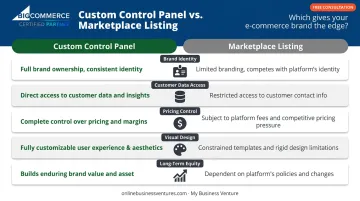
Amazon's seller policy explicitly prohibits direct marketing communications to buyers and restricts how sellers can use customer information. Every sale you make on a marketplace builds Amazon's audience, not yours.
Key Elements of a Branded Reseller Storefront
These are the building blocks that determine whether your storefront reads as a credible business or an afterthought.
Your Business Name and Domain
Your business name should be memorable, unique, and not locked to a single product category — room to expand matters. A custom domain (yourstore.com) is essential. It signals independence from any supplier or platform and is the first thing a savvy shopper notices.
Logo, Color Palette, and Visual Identity
A professionally designed logo and consistent color palette create immediate credibility. Use the same visual identity across your storefront, social media profiles, and any packaging your customers receive. Inconsistency here reads as unprofessionalism even to customers who can't articulate why.
MBV includes custom logo design in all three of its turn-key package tiers (Enterprise at $3,995, Premier at $4,995, and Millennium at $5,995) — it's a standard inclusion, not an add-on, specifically because brand identity at launch sets the tone for everything that follows.
Product Catalog Display and Custom Pricing
Your control panel should present products in a way that reflects your niche and voice. For resellers working within a dropship model, typical margins range from 10–15% when sourcing from open marketplaces, up to 20–50% for established retailers using vetted supplier networks, according to Shopify's 2025 dropshipping guide.
MBV resellers operate with stated margins of 35–200% on most products, with full control to set their own prices and run promotional discounts independently.
Trust Signals and Secure Checkout
This is where many new resellers leave money on the table. Baymard Institute's analysis of 50 studies puts the average cart abandonment rate at 70.22%. The reasons are instructive:
- 19% didn't trust the site with their credit card information
- 15% found the return policy unsatisfactory
- 19% were required to create an account before purchasing
Each of these friction points is fixable. Every branded storefront should have:
- An SSL security certificate visible at checkout
- A clearly stated return and refund policy
- Accessible customer support contact information
- A clean, guest-friendly checkout that doesn't require account creation
These aren't nice-to-haves. They're the baseline for converting a browser into a buyer.
About and Brand Story Section
An "About Us" page humanizes your brand and gives customers a reason to connect. Share your motivation, your niche expertise, or what makes your store different from a faceless competitor. Shoppers who identify with your story don't just buy once — they come back, and they tell people.
How to Set Up Your Custom Reseller Control Panel
Getting a branded storefront live doesn't require months of development work. Here's the practical path:
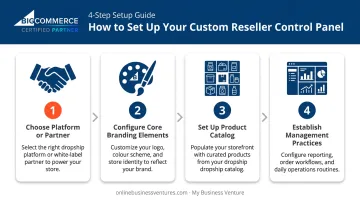
Step 1: Choose the right platform or partner Select an e-commerce platform or turn-key provider that supports white-label branding and blind dropshipping — one where you control the logo, colors, domain, and product presentation. MBV, for example, builds stores on BigCommerce as a certified developer and handles setup end-to-end — logo design, domain registration, SSL security, and merchant account configuration included. Most stores go live within days.
Step 2: Configure your core branding elements Before running any marketing, finalize:
- Desktop and mobile logo uploads
- Brand-consistent color palette and typography
- Payment processing under your brand name
- SSL certificate and security configuration
Step 3: Set up your product catalog Curate the products that fit your niche. With MBV, stores launch with 2,500+ pre-loaded products from a catalog of over 1 million items. XML-based catalog syncing keeps inventory current automatically — no manual updates needed.
Step 4: Establish ongoing management practices
- Monitor order fulfillment notifications
- Review your storefront appearance seasonally
- Track performance through your analytics dashboard
- Use your customer database to build repeat purchase campaigns
Common Branding Mistakes Resellers Should Avoid
These mistakes appear consistently among new resellers and are entirely preventable.
Launching Without a Cohesive Visual Identity
A generic template with no logo, no color scheme, and no custom domain signals amateur hour. Shoppers make trust assessments in seconds. A store that looks unfinished drives potential customers away before they ever browse a product.
Competing Purely on Price
Setting margins too thin to compete on price alone is unsustainable. Resellers who race to the bottom are always one undercut away from unprofitability. Set prices that reflect the branded experience you're delivering — trust and customer service justify a premium.
Neglecting Mobile Optimization
Mobile generated 56.4% of U.S. online revenue during the 2025 holiday season, according to Adobe's holiday shopping analysis. If your branded storefront doesn't render cleanly on a phone, you're actively losing more than half your potential buyers.
A Google-commissioned Deloitte study found that even a 0.1-second improvement in mobile site speed correlated with an 8% increase in retail conversions. Fast load times and clean mobile rendering directly affect your bottom line.
Frequently Asked Questions
What is a brand reseller?
A brand reseller is a business or individual that purchases products from a manufacturer or supplier and sells them to end customers under their own brand identity — often without manufacturing anything themselves. The reseller builds the customer relationship while the supplier handles production and fulfillment.
How do you become a reseller for brands?
Start by identifying a product niche you understand, then partner with a reputable supplier or turn-key e-commerce provider. From there:
- Register a custom domain
- Set up a branded storefront with your own logo and visual identity
- Develop a marketing strategy to reach your target customers
With the right platform, the entire process can take under a week.
Do resellers make good money?
Profitability depends on niche, pricing strategy, and marketing effort. Open-marketplace dropshippers typically see margins of 10–15%, while resellers using vetted supplier networks can reach 20–50% — and some turn-key platforms like MBV offer margin ranges of 35–200%. Resellers who invest in branding consistently command better margins than those competing on price alone.
What makes reselling illegal?
Reselling is legal. It crosses a line when resellers sell counterfeit goods, violate trademark agreements, misrepresent products, or operate without required licenses. Always source from reputable suppliers and review your reseller agreements before launching.
What is a custom control panel for resellers?
A custom control panel is a branded storefront management system that lets resellers display products, set pricing, process orders, and manage their customer-facing store entirely under their own brand name and domain — without the underlying supplier ever becoming visible to the end customer.
How does custom branding help resellers stand out?
Custom branding creates a memorable, trustworthy identity tied to the customer's purchase experience rather than a generic platform. That recognition drives repeat purchases, referrals, and stronger pricing power — because customers return to brands they trust, not to search results they may never find again.