That's the problem multichannel marketing solves. For small and home-based e-commerce businesses, it's the difference between being discoverable and being invisible.
This guide covers what multichannel marketing actually is, why it matters for your online store, how it differs from omnichannel, which channels to prioritize first, and how to build a simple strategy you can act on today.
Key Takeaways
- Multichannel marketing means reaching customers across multiple platforms independently, held together by one consistent brand identity.
- Customers who engage across multiple channels are typically more valuable than single-channel buyers — and that advantage compounds over time.
- You don't need an enterprise budget to start — two or three well-chosen channels are enough.
- Consistent brand messaging matters more than identical content; adapt your format to each platform.
- Tracking channel-specific metrics (open rates, engagement, conversion rates) is how you figure out where to focus next.
What Is Multichannel Marketing?
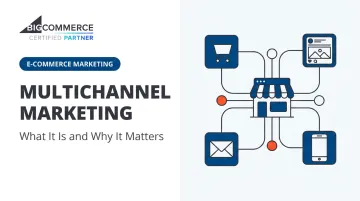
Multichannel marketing is the practice of reaching potential customers across multiple independent platforms — both online and offline — so they can discover, learn about, and buy from your business however they prefer.
For an e-commerce entrepreneur, those channels typically include:
- Your own website or online store — the transaction hub
- Social media (Instagram, Facebook, TikTok) — for discovery and brand awareness
- Email — for nurturing leads and recovering abandoned carts
- Online marketplaces (Amazon, eBay) — for additional reach
- Paid advertising (Google Shopping ads, social ads) — for targeted traffic
- Offline tactics (direct mail, local events) — situationally useful
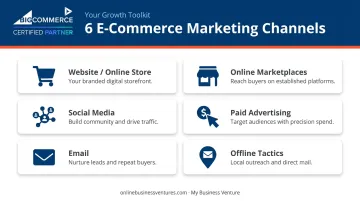
Each channel runs with its own strategy and content format suited to that platform's audience, but all of them consistently represent the same brand.
Say you run a small online store selling pet products. You post a TikTok video showing a dog bed in action. You email your subscriber list a limited-time discount on that same product. Meanwhile, a Google Shopping ad surfaces when someone searches "washable dog beds." Three different formats, one coherent campaign message.
Multichannel vs. Single-Channel Marketing
Relying on a single channel — say, one social media platform or just your website — creates real risk. Algorithm updates, platform outages, and shifting audience behavior can erode your visibility almost overnight.
During the 2021 Meta outage, one small business owner estimated losing $300–$400 in Facebook-driven sales in a single day. That's the cost of single-channel dependency made concrete.
Multichannel marketing creates redundancy. If Instagram's reach drops, email still works. If one ad campaign underperforms, organic search keeps pulling traffic. Diversified presence means no single platform disruption takes your business offline with it.
Why Multichannel Marketing Matters for Your E-Commerce Business
Your customers are not sitting in one place waiting to be found. They scroll Instagram during lunch, search Google when they have a specific need, check email in the morning, and browse marketplaces when they're comparison shopping. A brand that only shows up in one of those moments misses the rest.
The case for multichannel presence comes down to four practical realities:
1. Repeated exposure builds purchase intent. Marketers have long recognized that prospects need multiple touchpoints with a brand before they take action — a principle sometimes called the "rule of seven." The customer who sees your brand on social media, then gets your email, then finds your site through Google is far more likely to buy than someone who encountered you once. Multiple channels accelerate that familiarity.
2. Social commerce is already happening. According to HubSpot's survey of 700+ U.S. consumers, 25% of U.S. social media users made a purchase directly through a social platform in the prior three months. Social isn't just a discovery channel anymore — it's a transaction channel.
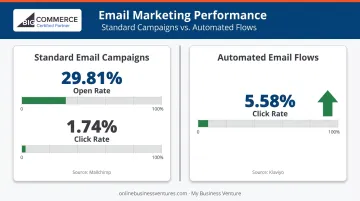
3. Email delivers measurable results. Mailchimp data shows e-commerce email averages 29.81% open rates and 1.74% click rates at the campaign level. Automated email flows — like abandoned cart sequences — perform even better, with Klaviyo reporting click rates of 5.58% for flows versus 1.69% for standard campaigns.
4. Small stores can compete without an enterprise budget. Multichannel marketing doesn't require an enterprise budget. It requires strategic focus. A home-based online store showing up consistently on two or three well-chosen channels can outcompete a larger competitor that's spread thin across too many platforms without a clear strategy.
For new entrepreneurs building on My Business Venture's platform, this becomes practical quickly. MBV's packages include built-in social media integration across all tiers — from basic social connectivity in the Enterprise package to a full Social Media Upgrade Package in the Millennium tier.
At the Millennium level, MBV's team handles channel setup, regular posting, and custom content creation on your behalf — so you're building multichannel presence from day one, not piecing it together later.
Multichannel vs. Omnichannel: What's the Difference?
Marketers often use these two terms interchangeably, but they describe very different approaches.
Multichannel marketing uses multiple platforms, each operating with its own strategy and content. An email campaign and a social media ad might run at the same time but function independently — they don't share data or automatically respond to each other.
Omnichannel marketing connects all channels into a single unified experience. Customer behavior on one platform directly influences what happens on another. A shopper who abandons their cart on your website automatically gets a follow-up email and sees a retargeting ad on Facebook featuring the exact product they left behind.
Here's a simple side-by-side:
| Multichannel | Omnichannel | |
|---|---|---|
| Channel coordination | Independent | Unified and interconnected |
| Data sharing | Separate per channel | Shared across all channels |
| Customer experience | Consistent branding, separate journeys | Seamless, single journey |
| Technical complexity | Low to moderate | High |
| Best for | Small/new e-commerce businesses | Established businesses with larger tech resources |
Which approach is right for you? If you're a new or small e-commerce business, start with multichannel. It requires less technical integration, fewer resources, and still expands your reach across more touchpoints compared to single-channel marketing. Omnichannel is worth building toward as your business grows, but it shouldn't be your starting point.
Key Channels to Include in Your Multichannel Strategy
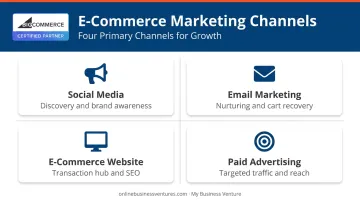
Rather than trying to be everywhere at once, start with two or three channels where your target customers actually spend time. Here are the four most relevant for small e-commerce entrepreneurs:
1. Social Media (Instagram, Facebook, TikTok) Best for product discovery and brand awareness. Short-form video performs particularly well for product demonstrations and lifestyle content. Focus on one or two platforms before expanding.
2. Email Marketing Your most direct line to interested customers. Use it for promotional campaigns, abandoned cart recovery, and nurturing past buyers. Unlike social media, your email list is an asset you own — no algorithm controls it.
3. Your E-Commerce Website The hub where transactions happen. Optimized product descriptions, site speed, and SEO-friendly content drive organic traffic over time. Every other channel should funnel toward this.
4. Paid Advertising Google Shopping ads surface your products when people are actively searching to buy. Social ads let you target specific demographics with precision. Even a modest budget, spent strategically, can drive meaningful traffic.
Once you know which channels exist, the next step is choosing which ones fit your store.
How to identify the right channels for your store:
- Research where your competitors are most active
- Look at where people in your product category are engaging (pet product buyers behave differently than electronics shoppers)
- Ask your first customers directly how they found you
Channel selection is only half the equation — content format matters just as much. Short, visual content works on social. Personalized, specific messaging works in email. Keyword-optimized, detailed copy works on your website. Adapt your message to fit each platform rather than reusing the same content across all of them.
How to Build a Simple Multichannel Marketing Strategy
Step 1: Define Your Goals and Target Audience
Before you choose channels or create content, get clear on two things: who you're trying to reach and what you want them to do.
Build a basic buyer persona — demographics, interests, shopping habits, and what problems your products solve for them. Then set specific goals: more website traffic, more email subscribers, more completed purchases. Vague goals produce vague results.
Step 2: Select Your Channels and Create a Content Plan
Pick two or three channels based on where your ideal customer is most active. Then build a simple content calendar that maps out what to post or send on each channel and when.
Your calendar doesn't need to be sophisticated — a spreadsheet works fine. The point is that each channel has planned activity, and the messaging across channels reinforces the same campaign even if the format differs.
Step 3: Maintain Consistent Branding Across All Channels
Logos, color schemes, tone of voice, and core messaging should look and feel the same whether a customer finds you on Instagram, opens your email, or lands on your website. Inconsistency creates friction and erodes trust.
Consistent branding doesn't mean identical content. It means a customer who encounters your business across multiple channels recognizes it as the same brand instantly.
Step 4: Measure, Learn, and Improve
Track these metrics by channel:
- Email: Open rates, click-through rates, unsubscribe rates
- Social media: Engagement rate, reach, follower growth
- Website: Traffic, conversion rate (industry averages range from 1.6% to 2.95% depending on the dataset), bounce rate
- Paid ads: Click-through rate, cost per click, return on ad spend
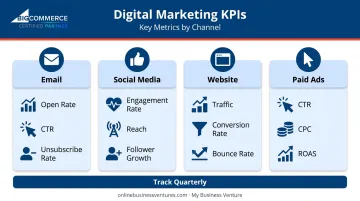
Compare performance across channels quarterly. Double down on what's working. Cut what isn't producing results after a fair trial period.
If interpreting analytics feels overwhelming at first, that's normal — most new entrepreneurs aren't data experts on day one. MBV's one-on-one business consulting and MBV University training exist for exactly this reason. Consultants like Kurt Higgins and Jason Backer work with clients on building their first content plan, selecting the right channels, and making sense of performance data, so the learning curve doesn't stall your momentum.
Frequently Asked Questions
What is an example of multichannel marketing?
A small online clothing store promotes a weekend sale on Instagram with a product photo, sends the same promotion via email to its subscriber list with a discount code, and runs a Google Shopping ad targeting people searching for similar items. Each channel operates independently but reinforces the same message.
What is the difference between omnichannel and multichannel marketing?
Multichannel marketing uses multiple platforms with separate strategies that don't share data. Omnichannel connects all channels into a unified experience where actions on one platform — like abandoning a cart — automatically trigger responses on others, like a follow-up email or retargeting ad.
What does a multichannel marketer do?
A multichannel marketer plans, creates, and manages campaigns across multiple platforms — adapting content to each channel's format while keeping the brand voice consistent. They track performance data and use it to improve results over time.
What channels should a small e-commerce business start with?
Start with two or three: your own online store or website, one or two social media platforms where your target customers are active, and email. These three alone cover discovery, nurturing, and conversion. Expand to paid ads and marketplaces as you grow.
How do I measure the success of a multichannel marketing campaign?
Track email open and click rates, social media engagement, website traffic, conversion rate, and revenue by channel. Over time, those numbers show you where to put more effort — and where to cut back.
Is multichannel marketing right for a small or home-based e-commerce business?
Yes — and it's more accessible than most beginners assume. A focused start on just a handful of channels requires no enterprise budget, just consistent effort. What matters isn't volume of channels; it's showing up reliably where your specific customers already spend their time.