Yet many aspiring business owners still aren't sure where to start — or even what an online entrepreneur actually does day to day.
This article breaks it down clearly: what online entrepreneurs are, how different business models work, what skills you'll need, and how to take your first concrete steps toward launching.
Key Takeaways
- An online entrepreneur builds and runs a business through digital platforms — selling products, delivering services, or monetizing content
- Business models range from e-commerce and dropshipping to freelancing and content creation — each with different startup costs and income potential
- No degree required — digital marketing, copywriting, and self-discipline matter far more
- Starting up requires minimal capital — a focused niche, a solid plan, and the right platform can have your store live within days
What Is an Online Entrepreneur?
An online entrepreneur is someone who creates, operates, and grows a business primarily through the internet — taking on financial risk in exchange for independence and profit potential.
The distinction from traditional entrepreneurship comes down to structure, not mindset. Online entrepreneurs don't need a physical storefront, a large team, or heavy upfront inventory. They can reach global customers from a laptop. The same rules of business still apply, though — strategy, sustained effort, and a willingness to absorb risk don't disappear just because the business lives online.
Common Types of Online Entrepreneurs
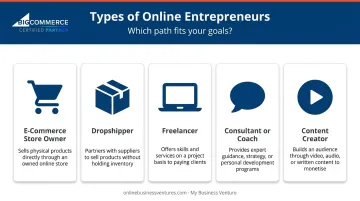
- E-commerce store owners — sell physical or digital products through an online storefront
- Dropshippers — sell products without holding inventory; a supplier handles fulfillment
- Freelancers — sell skills directly (writing, design, development, virtual assistance)
- Consultants and coaches — offer expertise through paid sessions, programs, or retainers
- Content creators — build audiences through blogs, YouTube, or social media and earn through ads, sponsorships, or affiliate marketing
Why This Path Is Growing
The freelance economy alone tells the story: 64 million Americans — 38% of the U.S. workforce — performed freelance work in 2023, up from 60 million the year before. Meanwhile, e-commerce continues to claim a larger share of total retail spending each quarter. The barriers to entry have dropped enough that many people launch their first online store for under $5,000 — sometimes far less.
What Does an Online Entrepreneur Do?
The day-to-day reality depends heavily on the business model — but there are tasks most online entrepreneurs share.
Daily Operational Work
Regardless of niche, most online entrepreneurs are regularly:
- Managing and updating their website or store
- Communicating with customers, suppliers, or clients
- Creating or curating products, content, or services
- Executing marketing campaigns across email, social, or paid channels
- Tracking sales data, traffic analytics, and key performance metrics
How It Varies by Model
The day-to-day work shifts significantly depending on what you sell and how:
- E-commerce store owner: product sourcing, pricing strategy, and customer service
- Freelancer: client pitches, project delivery, and relationship management
- Content creator: production schedules, audience growth, and brand partnership negotiations
Behind every model, there's also unglamorous but necessary work — SEO audits, email list segmentation, tracking return-on-ad-spend — that rarely gets mentioned but directly affects results.
Wearing Multiple Hats
That operational variety is exactly why early-stage online entrepreneurs end up handling everything themselves: marketing, accounting, customer support, and operations. It's a lot — but it's also how you learn which parts of the business need the most attention.
The goal over time is to build systems, automate repetitive tasks, and outsource where possible so the business scales without the founder burning out.
Popular Online Business Models
E-Commerce and Dropshipping
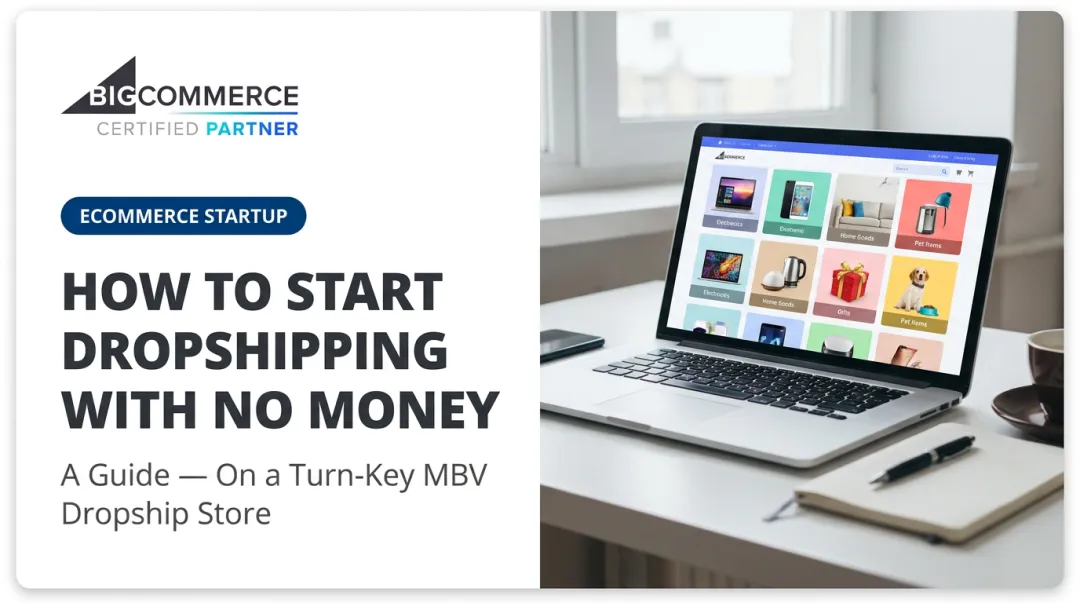
E-commerce is one of the most accessible entry points for new entrepreneurs. In the dropshipping model specifically, you sell products through your online store without ever stocking inventory — a supplier warehouses and ships the products directly to your customers.
The U.S. dropshipping market was valued at $135 billion in 2025 and is projected to reach $562 billion by 2033, growing at an 18.9% annual rate. Low overhead and minimal technical requirements make it appealing for beginners.
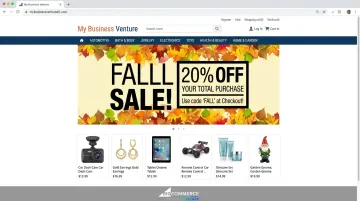
Companies like My Business Venture (MBV) offer turn-key e-commerce packages for entrepreneurs who want to bypass the setup complexity. Their platform — built on BigCommerce — comes pre-loaded with products across electronics, home goods, toys, and personal care, with real-time inventory syncing that keeps listings accurate automatically.
Packages start at $3,995 (one-time) and include:
- Custom logo design and branded storefront
- SSL security and fraud prevention monitoring
- Marketing tools and one-on-one consulting
- Profit margins ranging from 35% to 200% depending on category
Service-Based and Freelance Models
Freelancing requires almost no startup costs — your expertise is the product. U.S. freelancers generated approximately $1.27 trillion in earnings in 2023, spanning everything from graphic design and copywriting to bookkeeping and business consulting.
The tradeoff: income depends entirely on client acquisition and your ability to deliver results consistently. Unlike product-based models, there's no catalog to fall back on — your reputation is the inventory.
Content Creation and Monetization
Content creators build audiences first, then monetize through ads, sponsorships, affiliate links, or digital products. YouTube alone paid more than $32 billion to creators globally in 2024, with over 3 million channels earning through its partner program. Goldman Sachs estimated the creator economy at $250 billion in 2023, projecting it could reach $480 billion by 2027.
The catch: audience growth takes time, and early revenue is typically minimal. Most creators treat it as a long game, not a quick income source.
Essential Skills Every Online Entrepreneur Needs
Digital Marketing and SEO
No traffic means no sales. Online entrepreneurs need working knowledge of:
- SEO — optimizing content and store pages so they rank in search results
- Social media — building organic presence and running paid campaigns
- Email marketing — one of the highest-ROI channels available; 35% of companies report $10–$36 return per $1 spent on email, with 30% reporting $36–$50 returns
Consistency matters more than perfection. Small businesses that use multiple marketing channels consistently outperform those that rely on one.
Copywriting and Content Creation
Words drive conversions. Your product descriptions, landing pages, and email subject lines directly impact whether visitors buy or bounce. For solo entrepreneurs without a dedicated marketing team, strong copy is one of the highest-leverage skills to develop early.
Strong copy doesn't require a writing degree — it requires understanding what your customer needs and saying it clearly.
Time Management and Self-Discipline
There's no manager setting your schedule. Successful online entrepreneurs prioritize deliberately, which means making conscious daily decisions about where their time goes. Most who struggle don't lack motivation — they lack structure.
The habits that make the biggest difference:
- Protect deep work time — block hours for high-value tasks before distractions accumulate
- Automate or delegate — identify repetitive tasks (order updates, email sequences, social scheduling) that don't need your direct attention
- Stay consistent through slow periods — early results are rarely dramatic; the entrepreneurs who push through build compounding momentum
How to Become an Online Entrepreneur: A Step-by-Step Guide
Identify Your Niche and Business Idea
Start narrow. A niche lets you speak directly to a defined audience, face less competition, and build authority faster than a broad, generalist approach ever would.
Choose something at the intersection of:
- What you know or are genuinely interested in
- What people are actively searching for and spending money on
- What has manageable competition
Validate before committing — search Google Trends, browse Amazon bestsellers, and check whether competitors in the space are thriving. Demand is evidence.
Conduct Research and Build a Business Plan
Study the competitive landscape before spending a dollar. Who are the top players? What do they do well? Where are the gaps? Understanding your target customer — their problems, language, and buying habits — shapes every decision downstream.
A basic online business plan doesn't need to be 40 pages. It should clearly answer:
- What problem do you solve, and for whom? (your value proposition)
- How does the business make money? (your revenue model)
- Who are your customers, specifically? (your target audience)
- How will you reach them? (your marketing approach)
- What are your startup costs and realistic break-even timeline? (your financial projection)
Build Your Online Presence
A professional website is non-negotiable. A GoDaddy survey found that 89% of U.S. consumers consider a website important for small businesses — and Verisign research shows 84% view a business with a website as more credible than one with only a social media page.
Your online presence should include:
- A branded domain name
- A professional website or e-commerce store
- SSL security (builds customer trust)
- Social media profiles on platforms your audience actually uses
Getting all of this set up doesn't have to mean building from scratch. MBV's platform gets clients from signup to a fully operational, branded store in days — handling domain setup, product loading, payment processing, and SSL configuration as part of onboarding.
Launch, Market, and Grow
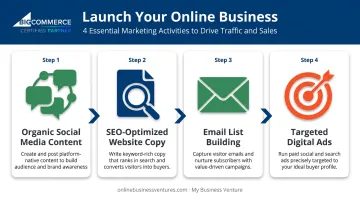
Once live, prioritize these marketing activities first:
- Organic social media content — consistent posting builds audience and trust without ad spend
- SEO-optimized website copy — helps drive free, sustained traffic over time
- Email list building — start collecting email addresses from day one
- Targeted digital ads — use paid channels to accelerate what's already working organically
Growth comes from testing, measuring, and adjusting. Track what's driving traffic and conversions, listen to customer feedback, and iterate. The entrepreneurs who grow fastest aren't the ones with flawless launches — they're the ones who stay consistent and keep adjusting.
Common Challenges Online Entrepreneurs Face
Standing out in a crowded market is the most common frustration. The solution isn't competing on price alone — it's differentiating through niche positioning, a consistent brand identity, and genuine value delivery over time. Customers build loyalty to businesses they trust, not just the cheapest option.
Cash flow and motivation during slow periods trip up many entrepreneurs. Early income is rarely linear, and that's normal. A few approaches that help:
- Set realistic expectations before your first sale — slow starts are part of the process
- Diversify revenue early with affiliate income, digital products, or services alongside physical products
- Join a mentor network or entrepreneurial community for accountability and perspective
Isolation is a real challenge in solo online businesses. Structured support helps more than most people expect.
Frequently Asked Questions
What does an online entrepreneur do?
An online entrepreneur manages the daily operations of an internet-based business — including marketing, customer communication, product or content management, and financial tracking. Specific tasks vary by model; an e-commerce owner handles very different work than a freelance consultant or content creator.
How much money can an online entrepreneur make?
Income varies widely — a freelancer might earn $50,000/year while a scaled e-commerce business generates multiples of that. There's no universal figure, because outcomes depend on your business model, niche, and how consistently you market.
Do I need a degree or prior experience to become an online entrepreneur?
No formal degree is required — many successful online entrepreneurs are entirely self-taught. Foundational knowledge in digital marketing and basic business operations is helpful, and can be built through online courses or programs like MBV University.
What is the easiest type of online business to start?
Dropshipping and freelance service businesses are among the most accessible starting points — low startup costs, minimal technical requirements, and established platforms to support beginners. A turn-key dropshipping store removes most of the setup complexity entirely.
How long does it take to start making money as an online entrepreneur?
Service-based businesses can generate early revenue within weeks. Shopify notes that new merchants should plan on two to four weeks of consistent marketing before a first sale, while product and content models generally take longer to build traffic and a profitable customer base.
What is the difference between an entrepreneur and an online entrepreneur?
The core mindset — risk tolerance and the drive to build something independently — is the same. The difference is operational: an online entrepreneur uses digital platforms for reach, sales, and delivery, removing traditional barriers like storefront costs and geographic limitations.