But here's the catch: traditional dropshipping doesn't work on Depop. List a catalog item from a wholesaler, use a supplier's stock photo, or resell generic goods you never touched — and Depop will remove your listings and potentially suspend your account.
The compliant path does exist, though. Sellers who build original designs, use print-on-demand fulfillment, and follow Depop's transparency requirements can run a legitimate, profitable dropshipping operation on the platform.
This guide covers exactly how to do that — from understanding Depop's policy to pricing for strong margins and knowing when to scale beyond the platform.
Key Takeaways
- Traditional dropshipping (generic wholesale items) violates Depop's policies and risks account suspension
- Compliant options include handcrafted items and print-on-demand products using your original designs
- Original photography, transparent descriptions, and fulfillment disclosures are required — no exceptions
- Niche selection and pricing discipline, not volume, produce the strongest profit margins on Depop
What Is Dropshipping on Depop and Why It's Different
Dropshipping works like this: a seller lists a product, a buyer purchases it, and a third-party supplier ships it directly to the buyer. No inventory. No upfront stock. The seller earns the margin between their retail price and the supplier's cost.
On most platforms, that's the whole model. Depop operates differently.
Depop describes itself as a global fashion marketplace where buyers come specifically for unique items. According to Depop's own research, 72% of items sold on the platform in 2021 were used, and 9 in 10 Depop purchases prevented a buyer from shopping brand-new elsewhere. Buyers aren't browsing for mass-market goods — they're hunting for things they can't find anywhere else:
- Vintage and secondhand clothing with documented provenance
- Handmade or upcycled pieces with a distinct creative identity
- Rare or limited items tied to a seller's personal aesthetic
That cultural identity directly shapes how Depop treats dropshipping. A generic t-shirt from a wholesale catalog has no place on a platform built around circular fashion and creative discovery. Sellers who treat Depop like a standard e-commerce channel usually find that out the hard way.
Depop's Dropshipping Policy: What's Allowed vs. What Gets You Banned
Depop's official Dropshipping Policy draws a clear line between what's permitted and what results in consequences.
What's Prohibited
- Standardized items ordered from wholesalers, catalogs, or other marketplaces
- Listings using supplier stock photos, customer photos, or generic product images
- Designer or luxury goods where you can't verify authenticity
- Any fulfillment arrangement where the seller has no design input or quality oversight
What's Allowed
- Handcrafted items personally designed by the seller
- Print-on-demand products produced using the seller's original designs
Compliance Requirements for Permitted Sellers
Qualifying as a permitted seller isn't just about having original designs — Depop holds sellers to specific operational standards as well:
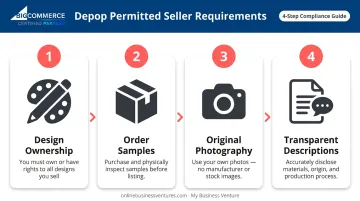
- Personally design and source the items — you must have genuine design ownership
- Purchase samples to assess quality — Depop explicitly requires this, so you can vouch for what you're selling
- Take original photographs — flat lays, modeled shots, close-ups — no supplier or stock imagery
- Write original descriptions — disclosing that a third party manufactures the item, where that partner is located, and realistic shipping timelines including production time
Non-compliance carries real consequences: Depop can remove listings without notice and suspend accounts temporarily or permanently. Review the policy before listing, not after.
The Compliant Dropshipping Model: Print-on-Demand and Original Designs
Print-on-demand (POD) is the primary compliant dropshipping method on Depop. The model: you create original designs, a fulfillment partner prints your design on a product when an order is placed, and they ship it directly to the buyer , ideally under your branding.
Choosing Your Niche
Depop's 2026 Trends Report shows exactly where buyer interest is moving. Top search increases include:
- Napoleon jacket: +1,202%
- Peacoat: +499%
- Bandage dress: +542%
- JNCO jorts: +495%
- Upcycled jersey: +233%
The platform's four identified themes — Modern Uniforms, Neo Nostalgia, Everyday Ceremony, and Romanticized Sports — give useful direction. Use Depop's Explore page and current social trends as inspiration, but the designs you create need to be genuinely original. Copying aesthetic trends creates both legal and policy risk.
Ordering Samples — Non-Negotiable
Depop's policy explicitly requires sellers to purchase products and assess quality before listing. Beyond policy compliance, samples serve three practical purposes:
- You verify the actual print quality and product feel before a buyer does
- You take the original photographs Depop requires
- You write accurate, honest descriptions based on what you actually received
Printful offers sample orders at a 20% discount, subject to eligibility rules — worth factoring into your startup budget.
Vetting Your Fulfillment Partner
Not all POD suppliers are equal. Prioritize partners who offer:
- Custom branding options (labels, hangtags, packaging inserts)
- Reliable, documented production and shipping timelines
- Quality control processes you can verify through samples
Note: Printful explicitly states that Depop does not integrate directly with Printful, so order management will be manual rather than automated. Account for that in your workflow.
Listing Transparency That Builds Trust
Buyers on Depop are savvy. A description that honestly explains "this item is made to order by a production partner in [location] and ships within 7–10 business days" builds more trust than vague language, and it keeps you compliant.
How to Set Up and Optimize Your Depop Store to Maximize Sales
Building Your Store Profile
Your shop name, profile description, and profile photo work together as your first impression. Make them specific to your aesthetic — "vintage sportswear prints" communicates more than a generic store name. A clear, honest profile description that explains your niche and production model sets buyer expectations early.
Depop SEO: Think Like a Buyer
Depop ranks listings based on how well descriptions match search terms, along with listing popularity, seller location, and listing age. The practical implication: write descriptions using the language your buyers actually search.
Compare:
- Generic: "graphic tee"
- Depop-native: "Y2K butterfly graphic oversized tee dark academia vibes"
Start descriptions with the most relevant search words, then include measurements, fit, color, category, and style. Use hashtags, but only relevant ones — Depop is explicit that descriptions should contain only terms applicable to the actual item.
Listing Content Best Practices
Strong listings on Depop combine multiple content types:
- Multiple photos: flat lay, worn or modeled, close-up of print or texture
- Short video clips: Depop's Seller Handbook recommends video to show movement, fit, and creativity
- Complete descriptions: measurements, material, production partner location, shipping timeline
Staying Active in Depop's Algorithm
Depop's search visibility depends partly on listing freshness. Practical tactics:
- Re-save and lightly edit listings regularly to signal activity
- Respond promptly to buyer messages — responsiveness signals reliability
- Engage with the community rather than treating Depop as a passive storefront
Pricing and Profit Margin Strategies
Calculating Your Price
Work through every cost layer before setting a price:
| Cost Component | What to Include |
|---|---|
| Fulfillment cost | POD supplier's product + print price |
| Depop fees | 0% selling fee (US/UK as of 2024); AU sellers: 10% through July 21, 2026, then 0% |
| Payment processing | US: 3.3% + $0.45 / UK: 2.9% + £0.30 / AU: 2.6% + AUD$0.30 |
| Shipping | Pass-through or built into price |
| Desired margin | Minimum 40% is a reasonable starting benchmark |
After calculating your floor price, benchmark against comparable listings on Depop to gauge where your item sits in the market.
Pricing Positioning
Depop buyers pay premiums for creative, unique items — that's the entire point of the platform. Don't race to the bottom against generic sellers. Price to reflect the design value and originality of your work.
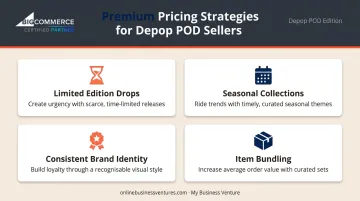
Strategies that support premium pricing:
- Run limited-edition drops — scarcity creates urgency and buyers will pay for it
- Time seasonal collections to Depop's trend cycles and aesthetic reports
- Build a consistent brand identity; shoppers pay more from sellers who feel intentional
- Bundle related items to increase average order value without discounting
Review supplier costs at least monthly. A fulfillment partner that quietly raises prices by even 5–10% can wipe your margin before you notice — renegotiate early or switch before it compounds.
Scaling Your Dropshipping Business Beyond Depop
Depop is a strong launchpad. Its community reach and engaged audience let you test designs, build a following, and understand what buyers actually want before committing to larger investments.
But the platform has a natural ceiling. Depop controls your listing visibility, sets your fee structure, and limits your product categories to what fits its creative marketplace identity. Serious volume requires more flexibility than any single marketplace can offer.
Using Depop as a Brand-Building Stage
The smarter move is to treat Depop as step one. Build your audience, identify which designs convert, and refine your product-market fit while the community does your early market research for you. Then migrate loyal customers to a dedicated storefront where you control the catalog, terms, and margins.
That transition is where structure matters. For entrepreneurs ready to make that move, My Business Venture offers a structured path from marketplace seller to independent store owner. MBV's packages — ranging from $3,995 to $5,995 as a one-time investment — include a branded BigCommerce store pre-loaded with 2,500+ curated products, profit margins of 35–200%, blind dropshipping under your brand name, and one-on-one business consulting. That means you're not starting from scratch — you're scaling what already works.
Scaling Priorities
When you're ready to grow, focus on:
- Audit your Depop sales data to identify which designs convert — then lead with those in your new store
- Expand into adjacent niches early rather than depending on a single product line
- Add automation tools or team support before order volume outpaces your capacity
- Track margin per product, not just total revenue, so growth doesn't eat your profits
Frequently Asked Questions
Is dropshipping on Depop legal?
Dropshipping on Depop is legal only under specific conditions. Sellers must offer handcrafted items or print-on-demand products using their own original designs, take original photos, and disclose third-party manufacturing details. Traditional reselling of generic wholesale goods is prohibited and can result in account suspension.
Is dropshipping on Depop profitable?
Margins depend on your fulfillment costs, Depop's processing fees, and how well your listings convert. Sellers who focus on higher-priced, genuinely unique items consistently earn more per sale than those chasing volume.
Is $100 enough to start dropshipping on Depop?
Starting with $100 is realistic for a basic print-on-demand setup — it can cover product samples and initial listing costs. Investing a bit more in quality photography or packaging inserts, however, will meaningfully improve your results from the start.
What products are allowed for dropshipping on Depop?
Depop permits handcrafted items personally designed by the seller and print-on-demand products using the seller's original designs. Generic catalog items, stock-photo listings, and luxury or designer goods sourced from wholesalers are explicitly prohibited.
What happens if you break Depop's dropshipping policy?
Depop can remove non-compliant listings without notice and permanently suspend seller accounts. A suspended account means losing your entire sales history and buyer trust — with no guaranteed path to reinstatement.
How do I set the right price for my Depop dropshipping products?
Calculate your total costs — fulfillment, processing fees, and shipping — then benchmark against comparable Depop listings. Price to reflect the creative and quality value of your designs rather than competing on the lowest price. Depop buyers expect to pay for originality.