Introduction
You've decided to launch an online store. Then you hit a wall: "BigCommerce developer." Suddenly you're reading about APIs and Stencil themes, and browsing an app marketplace you never expected to need.
Here's the pain point most first-time entrepreneurs run into. You assume you'll need to find a developer and pay for their time before your virtual doors even open. That process eats weeks and thousands of dollars before you've sold a single item.
This guide breaks down what a BigCommerce developer actually does and what that expertise typically costs. Then it shows how an MBV store already includes certified BigCommerce development built in from day one.
Key Takeaways
- BigCommerce developers combine front-end design, back-end setup, and integrations to build ecommerce stores
- Hiring one independently can cost thousands and take weeks of vetting before work even starts
- MBV is a Certified BigCommerce Developer, so that expertise comes built into every store
What Is a BigCommerce Developer?
BigCommerce is a SaaS ecommerce platform used by retailers, manufacturers, and distributors to run their online stores. A BigCommerce developer is a specialist who builds, customizes, and maintains stores on that platform, working with everything from storefront design to backend catalog data.
The platform's reach is substantial. Store Leads tracked 36,850 live BigCommerce stores as of mid-2026, a technology-detection count that reflects how widely merchants have adopted the platform. That scale is exactly why BigCommerce expertise has become its own specialty rather than a generic web skill.
Why platform-specific skills matter:
- Stencil is BigCommerce's theme framework, built on Handlebars templates with a Node.js-powered CLI for local development
- BigCommerce APIs, including REST and GraphQL, let developers manage products, orders, customers, and carts programmatically
- The App Marketplace offers more than 1,200 apps spanning payments, shipping, CRM, accounting, and analytics
A developer who's never touched BigCommerce might know HTML and JavaScript cold, but still stumble on Stencil's YAML front matter or the quirks of BigCommerce's data model. That's the gap platform certification is designed to close.
BigCommerce's Partner Tier System
BigCommerce vets its agency partners through three tiers: Certified, Preferred, and Elite. Certified partners have been reviewed for capabilities, past performance, and client results, while Preferred and Elite mark increasingly demonstrated success on the platform.
The exact numeric thresholds aren't publicly disclosed, but the tiering signals one thing clearly: not every developer who touches BigCommerce has been vetted by BigCommerce itself. MBV holds Certified BigCommerce Developer status, meaning the team behind an MBV store has already cleared that bar.
Skills and Qualities to Look for in a BigCommerce Developer
If you're evaluating a developer or agency, look past the sales pitch. Focus on:
- Technical stack: HTML, CSS, JavaScript, plus API and Node.js familiarity for Stencil work
- Business and ecommerce acumen: UX principles, conversion optimization, and comfort with retail or dropship logistics
- Trust signals: verified certifications, a portfolio you can actually review, and client feedback that isn't cherry-picked
A slick portfolio site means little without proof the person behind it has shipped working BigCommerce stores.
What Does a BigCommerce Developer Actually Do?
The work spans the entire lifecycle of a store, not just the initial build.
Discovery and planning. Before any code gets written, a developer needs to understand your product catalog, target customer, and business goals. Skip this step and you end up with a store that looks nice but doesn't match how you actually sell.
Theme and storefront design. This means building or customizing Stencil-based themes so the store visually matches your brand, from layout to color palette to mobile responsiveness.
Third-party integrations. Most stores need more than a shopping cart. Developers connect:
- Payment gateways and checkout processors
- Shipping carrier accounts
- ERP or CRM systems for larger operations
- Dropship supplier feeds for inventory-free selling
Backend and catalog configuration. Setting up product data correctly, then using XML or API feeds to keep inventory and pricing synced in real time, prevents the classic ecommerce headache of selling something you no longer have.
Performance, security, and SEO. Page speed, SSL encryption, and on-page SEO fundamentals all fall under this umbrella. A fast, secure, discoverable store converts better than one that's just pretty.
Ongoing maintenance. Stores aren't "set and forget." Developers troubleshoot issues, apply updates, and add new integrations as a business scales.
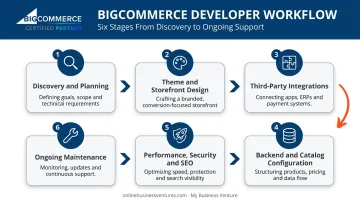
Here's the catch: most independent developers stop at build and hand you an invoice for everything after that. Whether that ongoing support is included or billed separately is a question you need to ask upfront, and it's exactly where costs start to add up. MBV's certified BigCommerce developers handle this entire lifecycle as part of your package, so ongoing support and maintenance don't show up as a surprise line item later.
The Real Cost of Hiring a BigCommerce Developer on Your Own
Building a BigCommerce store from scratch through an independent developer or agency isn't cheap, and it isn't quick either.
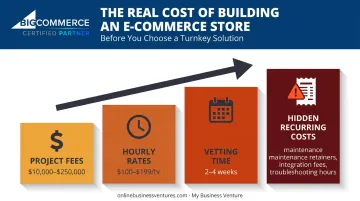
Project and hourly costs. According to Clutch's development pricing data, BigCommerce project fees typically range from $10,000 to $250,000, with featured agency hourly rates commonly falling between $100 and $199 per hour. Where you land depends on site complexity, feature scope, and how many integrations you need.
The hidden time cost. Before a single line of code gets written, you're stuck vetting candidates:
- Reviewing portfolios for relevant BigCommerce experience
- Verifying certifications (there's no public lookup tool for individual credentials)
- Negotiating project scope and timeline
- Checking references from actual clients, not testimonials on a website
That process alone can eat two to four weeks for a first-time business owner who doesn't know what red flags to look for.
Recurring costs nobody mentions upfront. BigCommerce's SaaS platform handles core hosting and security, but that's not the same as ongoing developer support. Clutch's research confirms these costs often surface after the initial quote:
- Maintenance retainers for routine site updates
- App integration fees when adding new tools
- Troubleshooting hours billed separately from the build
Add it up, and a "simple" store build can turn into a five-figure, multi-week commitment before you've made a single sale.
How MBV's Certified BigCommerce Developers Build Your Store For You
This is the part that changes the math entirely. MBV is a Certified BigCommerce Developer, which means the vetting process described above is already done. You won't need to search for a developer, review portfolios, or negotiate rates. The expertise is baked into your package.
From Sign-Up to Live Store in Days, Not Weeks
The turnkey build includes:
- A custom logo design so your business looks established from launch
- A fully branded storefront built on BigCommerce's platform
- An SSL-secured shopping cart, encrypted and ready for real transactions
Clients consistently report going live in under a week, not the multi-week timelines typical of custom independent builds.
Real-Time Inventory Without the Custom Development Bill
One of the more technically demanding pieces of any dropship business is keeping product data accurate. MBV's proprietary XML technology automatically syncs inventory and pricing across a catalog of 1 million+ dropship products, continuously adding new arrivals and removing discontinued items.
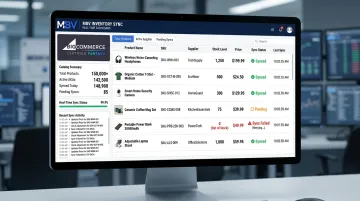
Building this kind of live feed independently would typically require custom API development. That's exactly the kind of work that pushes project quotes toward the higher end of the $10,000–$250,000 range mentioned earlier.
Training That Goes Beyond the Technical Build
Every MBV client gets one-on-one business consulting alongside the technical setup. This training program is shaped by strategic advisor Kevin Harrington, an original Shark Tank investor whose ventures have generated over $6 billion in global sales. His expertise is passed to MBV's consulting team, who then work directly with clients through MBV University.
Ongoing Support Without a Separate Retainer
Where independent developers often bill maintenance separately, MBV bundles it in:
- 24/7 monitored hosting with SSL security
- Real-time fraud-prevention screening on every transaction
- Continued platform updates with no additional retainer fee
Credibility Backed by Three Decades
MBV holds official BigCommerce partner standing and works alongside major dropship supplier Doba. The company also carries a BBB A+ rating after more than 30 years in business. That's a different kind of track record than a freelancer's five-star reviews from last quarter.
Frequently Asked Questions
What is a BigCommerce developer?
A BigCommerce developer is a specialist who builds, customizes, and maintains online stores on the BigCommerce platform. Their work spans front-end design, backend configuration, and third-party integrations.
What does a BigCommerce developer do on a typical project?
A typical project covers discovery, theme and storefront customization, payment and shipping integrations, and post-launch support. Some developers stop at launch; others include ongoing maintenance.
How much does it cost to hire a BigCommerce developer?
Project fees typically range from $10,000 to $250,000, with hourly rates often falling between $100 and $199. Actual cost depends heavily on project complexity and scope.
Do I need to hire my own BigCommerce developer if I build my store with MBV?
No. MBV is a Certified BigCommerce Developer, so that expertise is already included in your package. There's no separate search, vetting, or hiring process needed.
What should I look for in a good BigCommerce developer or partner?
Look for verified certifications, a portfolio of real BigCommerce builds, and documented client reviews you can independently confirm. Technical skill alone isn't enough without proof of results.
How long does it take to launch a BigCommerce store?
Custom independent builds can take several weeks depending on complexity. MBV's turnkey model gets clients live in days, with many reporting a fully operational store in under a week.