This is where most first-time entrepreneurs hit a wall. Disorganized product catalogs cost sales. Customers who can't find what they want, or who spot a wrong price, click away and rarely come back. For someone without a technical background, juggling suppliers, images, and pricing spreadsheets can turn an exciting launch into a stalled project.
This guide breaks down what product catalog management actually means, why it matters for a new online store, and how MBV's turn-key platform handles the heavy lifting so entrepreneurs can launch faster.
Key Takeaways
- Product catalog management keeps your product info organized and consistent storewide
- A catalog is customer-facing; a PIM system powers it behind the scenes
- Well-organized catalogs build trust, boost conversions, and make upselling easier
- Manual updates and inconsistent supplier data trip up most new entrepreneurs
- MBV's dropship model and XML tech deliver thousands of pre-organized products instantly
What Is Product Catalog Management?
Product catalog management (PCM) is the ongoing work of creating, categorizing, pricing, and maintaining product listings so customers can browse and buy without friction. It's a continuous process, not a one-time setup task, that keeps every listing accurate as products change, prices shift, and stock levels fluctuate.
A product catalog itself is simply the curated collection of items your customers see: descriptions, images, pricing, and specifications, all designed to help someone decide what to buy. Think of it as your digital storefront shelf.
Catalogs used to be printed brochures mailed once or twice a year. Today's digital catalogs update constantly, and real-time accuracy on stock and pricing matters more than ever. A shopper who adds an item to their cart only to discover it's out of stock will often abandon the purchase entirely rather than wait.

Product Catalog vs. PIM: What's the Difference?
Here's a simple way to think about it: a Product Information Management (PIM) system is the filing cabinet. It's the centralized backend database that stores and enriches all your product data: specs, images, descriptions, supplier details. The catalog is the storefront display built from that data, the version your customers actually browse and shop.
Most small business owners never need to build or manage a PIM themselves. That's backend infrastructure work, and MBV handles it automatically as part of your turn-key store setup, syncing pricing and stock data from the dropship network in real time. You get the polished storefront catalog without ever touching the database that powers it.
Why Product Catalog Management Matters for Your Online Store
Accurate, consistent product information is the foundation of customer trust. According to a GS1 US infographic on data quality, 86% of consumers are unlikely to buy from a brand again after receiving inaccurate product information. One wrong spec or missing detail can cost you a repeat customer for good.
Descriptions matter just as much as accuracy. Baymard Institute research on product descriptions found that 10% of major ecommerce sites had consistently insufficient descriptions, leading shoppers to leave the page or make wrong assumptions that result in unnecessary returns.
Proper categorization and tagging solve a related problem: findability.
- Customers who can't locate a product through search or browsing tend to bounce
- Clear category hierarchies reduce the guesswork involved in navigation
- Well-tagged products surface in on-site search and external search engines alike
There's a scaling benefit too. A catalog built with consistent structure from day one makes it far easier to add new products or expand into new categories later, without rebuilding your store's navigation from scratch.
The Core Components of a Well-Organized Product Catalog
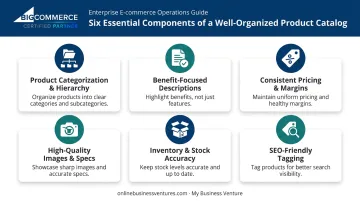
Every strong catalog shares a handful of essential building blocks. Skip one, and you'll feel it in your conversion rate.
- Product categorization and hierarchy — Group items into logical categories and subcategories so customers browse intuitively instead of hunting
- Clear, benefit-focused descriptions — Skip the jargon; highlight what matters to the buyer, not just technical specs
- Consistent pricing and margin visibility — Know your cost versus retail price clearly, especially important in a dropship model where margins vary by product
- High-quality images and specifications — Accurate size, color, and dimension details reduce returns and build buyer confidence
- Inventory and stock-level accuracy — Real-time syncing prevents overselling items that are actually out of stock
- SEO-friendly tagging and keywords — Proper tags help products surface through both on-site search and external search engines
Images deserve special attention here. Baymard's research on image quality found that 56% of users interact with product images as their first action on a product page. Yet 25% of sites provided images inadequate for evaluating the product. Poor photos or missing zoom functionality push shoppers straight to a competitor's listing.
These six components aren't flashy, but they directly drive conversions. Skip one, and sales slip toward a competitor with a better-organized store.
Common Product Catalog Challenges for New Entrepreneurs
Running a store solo or part-time comes with real catalog headaches, and most first-time owners underestimate them until they're neck-deep in spreadsheets.
Manual updates take forever. Updating hundreds or thousands of listings by hand is slow and mistake-prone, especially without a dedicated team.
Multiple suppliers mean messy data. Sourcing from different vendors often brings inconsistent formatting, missing details, or outdated pricing that someone has to reconcile.
Categorization becomes overwhelming. Without the right tools, a growing catalog spirals into disorganization fast — and disorganized stores get neglected or abandoned.
These are common, everyday problems for first-time sellers, and they're often the reason promising online stores stall out within the first few months.
How MBV Makes Product Catalog Management Easy for New Business Owners
MBV built its entire platform around removing exactly these pain points. Instead of building a catalog from scratch, clients start with a curated selection of 2,500+ ready-to-sell products, pre-organized into categories like Electronics, Name Brand Toys & Games, Bath & Body, Home & Office, Gifts, Holiday Items, and Pet Products.
There's no manual setup required. Clients also have access to a broader supplier network exceeding 1 million products if they want to expand their niche further.
Behind the scenes, MBV's proprietary XML catalog technology automatically syncs pricing, inventory, and product updates in real time. New arrivals get added; out-of-stock or discontinued items get pulled. Store owners never touch a spreadsheet to keep listings current, and that same hands-off approach carries through to order fulfillment.
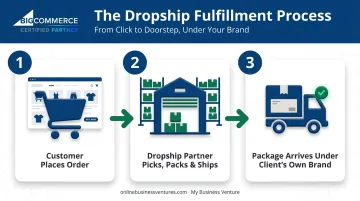
The dropship fulfillment model removes inventory management entirely:
- A customer places an order on the client's storefront
- MBV's dropship partner picks, packs, and ships the item directly to the customer
- The package arrives under the client's own brand through blind drop shipping — no supplier name in sight
Every package includes custom logo design and a branded storefront, so the catalog presentation stays consistent with the client's identity from the homepage all the way through delivery.
Clients also get one-on-one training through MBV University, plus support from dedicated business consultants like Kurt Higgins and Bruce Witkin, who help new owners understand pricing controls and product selection with confidence.
The result: a fully organized, professional catalog that goes live in days rather than months, with profit margins between 35% and 200% on most products depending on the pricing decisions the client makes.
Frequently Asked Questions
What is product catalog management?
Product catalog management is the process of organizing, updating, and presenting product data consistently so customers can browse and buy with confidence. It covers everything from categorization to pricing to real-time stock accuracy.
What is the difference between a product catalog and a PIM?
A PIM is the backend system that stores and manages product data, while the catalog is the customer-facing presentation built from that data. Think filing cabinet versus storefront display.
How many products can I sell with a dropshipping catalog?
Dropship catalogs range from a curated few thousand products to well over a million, depending on the platform and supplier network. MBV clients start with 2,500+ curated products and can scale toward a catalog of 1 million or more.
Do I need technical skills to manage my product catalog?
Not with a turn-key platform. MBV automates most catalog setup and updates through its XML technology, so clients need minimal technical know-how to keep their store current.
How often should product catalog information be updated?
Pricing and stock levels should update in real time to avoid overselling. Review descriptions and images periodically to keep them accurate and relevant.
Can I customize which products appear in my store?
Yes, most platforms, including MBV, let entrepreneurs select and organize products from a larger catalog to match their niche and branding rather than featuring every available item.