It's a fair question. The global dropshipping market hit an estimated $464.4 billion in 2025, according to Grand View Research, and that scale attracts both legitimate retailers and bad actors selling get-rich-quick courses.
Because dropshippers never touch physical inventory, many assume the model must live in some legal gray zone. It doesn't. This guide gives you the direct legal answer, the real risks worth watching, and how a vetted, turn-key platform like MBV removes much of the guesswork for new store owners.
Key Takeaways
- Dropshipping is fully legal in the U.S. under standard business rules
- Legal trouble usually stems from bad suppliers, counterfeit goods, or false claims
- Sales tax and licensing rules apply to dropshippers like any other retailer
- A vetted platform reduces the supplier and compliance risks of DIY store setups
Is Dropshipping Legal? The Direct Answer
Yes. Dropshipping is a fully legal, widely used order-fulfillment model. Major retailers have used it for decades, right alongside solo entrepreneurs running stores from a laptop.
Michigan Attorney General Dana Nessel put it plainly in a 2023 consumer alert: "Drop-shipping itself is not illegal." That warning came paired with cautions about specific bad practices, not the model as a whole.
Here's the part people miss: when you dropship, you're still the seller of record. That means you carry the same basic retail responsibilities as a store that stocks its own warehouse:
- Maintain accurate product listings and marketing
- Handle customer service and returns
- Collect sales tax where required
- Comply with consumer protection law
Why the confusion happens: Low overhead and remote supplier relationships make dropshipping feel unregulated. You're not filling boxes yourself, so it's easy to assume the rules don't apply the same way. They do. The absence of a warehouse doesn't erase your legal obligations as the business selling to the public.
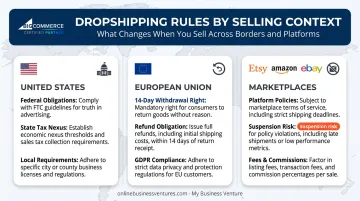
Does Legality Change by Country or Platform?
Legal status shifts depending on where your customer lives and which marketplace you're using.
By country: U.S. sellers answer to federal, state, and local rules. Sell into the EU, though, and you inherit stricter consumer protections.
EU shoppers generally get 14 days to withdraw from an online purchase without giving a reason, and traders must reimburse them within 14 days of being notified. That obligation lands on you, the retailer, even if a supplier overseas fulfilled the order.
By platform: Marketplaces write their own rules on top of the law. Etsy's seller policy, for example, generally prohibits dropshipping and reselling outside a few narrow exceptions.
Violating it risks listing removal or account suspension, even though you haven't broken any actual law. Amazon and eBay carry similar restrictions, so read the fine print before you build a business on someone else's marketplace.
Key Legal Risks Every Dropshipper Should Understand
Dropshipping itself is legal. The risk comes from what you sell, how you market it, who you source from, and whether you meet tax and licensing rules in your state.
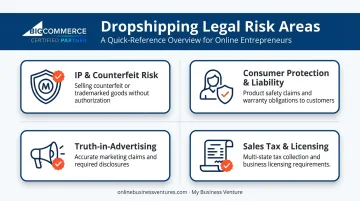
Intellectual Property & Counterfeit Product Risks
If a supplier ships unauthorized branded goods or outright counterfeits through your store, you can be held liable for trademark or copyright infringement, even if you had no idea the products were fake.
A real example: in Kafeel v. CJDropshipping (N.D. Ill., 2025), a dropshipper alleged he unknowingly listed counterfeit products sourced through a supplier and then faced financial losses tied to a separate IP dispute. The case was ultimately dismissed on jurisdictional grounds, but it illustrates a genuine exposure point: supplier problems become your legal problems fast.
Consumer Protection & Product Liability
As the seller of record, you're accountable to the customer for product safety and quality, not your supplier. Even with MBV's turn-key model, where a third-party partner sources and ships every order, the listed store owner remains legally responsible for what reaches the customer.
If a product injures someone or fails to perform as advertised, the customer's complaint lands on your business, regardless of who manufactured the item. This is exactly why product liability insurance is worth considering as a safeguard, even for a lean, home-based operation.
Truth-in-Advertising Compliance
Every marketing claim you make has to accurately reflect the product you're selling. The FTC requires evidence supporting ad claims before an ad even runs, and that duty falls on the retailer, not the manufacturer.
In 2022, the FTC sought a combined $5.5 million from Kohl's and Walmart over textiles marketed as bamboo that weren't, plus other misleading environmental claims in product descriptions. Neither company manufactured the mislabeled products; they were penalized for how they marketed them. The same standard applies to a one-person dropshipping store.
Sales Tax, Nexus & Business Licensing
"Nexus" is the legal trigger that requires you to collect sales tax in a state, and it's based on sales volume, not on having a warehouse there. This applies to MBV store owners too: nexus depends on where you sell, not where your fulfillment partner ships from.
California, for instance, requires an out-of-state retailer to register and collect use tax once its combined sales into the state exceed $500,000 in the current or preceding calendar year. Other states set their own, often lower, thresholds. Most states also require a general business license or resale certificate before you can legally sell retail goods, dropshipped or not.
When Dropshipping Gets People "In Trouble"
Nearly every reported dropshipping "scam" traces back to two things: disreputable suppliers or overpriced get-rich-quick training courses. State attorney general offices, including Michigan's, have issued consumer alerts specifically warning shoppers about inflated prices, fake goods, non-delivery, and withheld refunds tied to shady drop-shipping operators — not the fulfillment model itself.
Red flags worth watching for:
- Suppliers who hide their physical location or won't answer direct questions
- No clear, published return or refund policy
- Guaranteed-profit promises ("make $10,000 in 30 days")
- Supplier lists you can't independently verify or research
- Pressure to buy an expensive "master class" before you can access suppliers
That brings up the $500 startup budget question directly. A small initial investment is a genuine feature of dropshipping, since no warehouse or inventory is required to start.
Where new entrepreneurs actually lose money is overspending on gatekept courses that promise secret supplier lists, or trusting unverified sourcing sites that turn out to be middlemen with nothing to sell.
The model is lean by design; the trap is what gets sold alongside it. Established providers like MBV avoid that trap by vetting supplier partners such as Doba and publishing transparent pricing and policies backed by a BBB A+ rating.
How a Turn-Key MBV Dropship Store Reduces Your Legal Risk
Supplier vetting is one of the biggest exposure points for a DIY dropshipper. Every hour spent researching whether a random overseas supplier is legitimate takes time away from building your business, and getting it wrong can mean counterfeit products landing on your customer's doorstep.
MBV addresses this by giving store owners access to a pre-loaded catalog of 2,500+ curated products, pulled from a broader network of up to 1 million+ items from brand-name manufacturers, through its dropship partner Doba. That curation narrows the field considerably compared to sourcing blind from an unknown supplier directory.
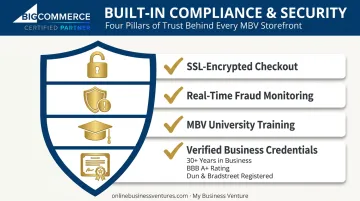
Security and compliance infrastructure built in:
- SSL-encrypted shopping cart with a secured payment gateway, addressing the data-security obligations that come with accepting customer payments
- Real-time fraud-prevention monitoring, included across every package tier, with MBV covering resulting losses if a fraudulent transaction slips through
- One-on-one training through MBV University, led by consultants like Bruce Witkin and Jason Backer, covering customer service standards and accurate product representation
MBV has also been in business for over 30 years, carries a BBB A+ accreditation, and is registered with Dun & Bradstreet. These third-party credentials distinguish an established turn-key partner from unverified suppliers with no track record.
One clarification matters here: MBV handles the technology, supplier relationships, branding, and fulfillment, but two responsibilities stay with you:
- Registering your business entity with your state or local government
- Securing your own licenses and sales tax permits for the jurisdictions where you operate
MBV consultants can point you toward the right resources, but completing this registration is yours to do, the same as it would be for any retail business you opened.
Quick Compliance Checklist Before You Launch
Run through this before you accept your first order:
- Register your business structure, whether sole proprietorship, LLC, or otherwise, and get your EIN and sales tax ID
- Vet any supplier thoroughly: request product samples, confirm their return policy, and check that they're not shipping counterfeit goods (MBV pre-vets its dropship partners for you)
- Publish clear marketing and policies: keep product claims accurate, post a visible return/refund policy, and consider product liability insurance for extra protection
Frequently Asked Questions
Is dropshipping legal?
Yes. Dropshipping is a legal, widely used retail model in the U.S. and most countries, provided the seller follows standard tax, consumer protection, and advertising laws.
Can you get in trouble for dropshipping?
Legal trouble typically comes from counterfeit products, misleading ads, unpaid sales tax, or disreputable suppliers — not from the dropshipping model itself.
Is $500 enough to start dropshipping?
A $500 budget can cover basic DIY platform and domain costs, but it won't include supplier vetting, branding, or training. A turn-key solution offers more built-in value and lower risk for first-time entrepreneurs.
Do you need a business license to dropship?
Most states and municipalities require a retail business license or sales tax permit for dropshipping, just as they would for any other retail business selling to consumers.
Do you have to collect sales tax on dropshipped items?
You must collect and remit sales tax in any state where you've established a tax nexus, whether through physical presence or exceeding that state's sales-volume threshold.
What's the safest way to start a dropshipping business?
Work with vetted suppliers, keep your policies transparent, and consider an established turn-key partner like MBV that handles sourcing, technology, and compliance guidance for new entrepreneurs.