Most new sellers don't fail because dropshipping is broken. They fail because they pick oversaturated or razor-thin-margin niches without ever testing demand first. This guide breaks down the most profitable dropshipping niches heading into 2026, how to validate them before you invest, and how a turn-key MBV dropship store removes much of the guesswork around product selection.
TL;DR
- Profitable niches combine healthy markups, steady demand, low brand loyalty, and strong average order value.
- Top categories for 2026 include pet wellness, beauty and wellness accessories, tech accessories, eco-friendly home goods, and fitness recovery gear.
- Validate before you launch using search trend data, competitor research, and real margin math — not gut feeling.
- A turn-key MBV store delivers a curated catalog aligned with these categories, complete with built-in margins and expert support.
Understanding Profitable Niches in the Dropshipping Industry
A dropshipping niche is a focused product category (think orthopedic dog beds, not "everything for pets"). Instead of running a general store that competes on price against Amazon, niche sellers build authority around a specific audience and its problems.
That authority claim comes with a caveat: there isn't a single controlled study that directly proves niche stores outperform broad-catalog stores on conversion or revenue. What we do know: general ecommerce conversion rates sit in a narrow band across most categories, leaving undifferentiated stores little room to stand out.
Niche focus fixes that problem. It lets you speak directly to a buyer's specific pain point instead of diluting your message across dozens of unrelated products.
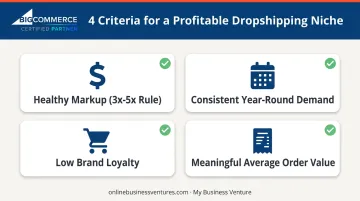
Four criteria separate a profitable niche from a time-waster:
- Healthy markup potential: aim for the classic 3x-5x rule, where your selling price is three to five times your landed product cost
- Consistent year-round demand: not a category that spikes for six weeks and dies
- Low brand loyalty among buyers: customers who'll switch to your store instead of insisting on one specific brand
- A meaningful average order value: high enough that shipping and platform fees don't eat your margin alive
The next section ranks the niches that currently check all four boxes, based on demand trends, margin potential, and what's actually available through curated dropshipping catalogs.
Top Profitable Dropshipping Niches for 2026
These five categories were selected because they show durable demand, workable margins, and broad product availability across major dropshipping catalogs. These niches match categories already available in MBV's turn-key store catalog, including Pet Items, Bath & Body, Electronics, and Home & Office Products.
Pet Products and Pet Wellness
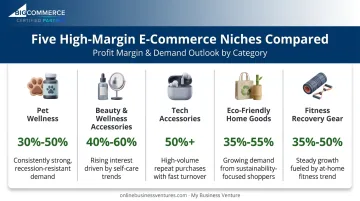
U.S. pet spending hit $158 billion in 2025, up 3.7% from the prior year, with the American Pet Products Association projecting $165 billion for 2026. Pet owners treat wellness spending as non-negotiable, which makes this category resistant to price shopping and prone to repeat purchases.
| Metric | Detail |
|---|---|
| Average Profit Margin | Typically 30%-50% markup on wellness accessories |
| Demand Outlook | Steady year-round, with modest holiday spikes |
| Best-Selling Products | Orthopedic beds, grooming tools, interactive feeders |
Health, Beauty and Wellness Accessories
Beauty and wellness accessories benefit from routine-driven repeat buying. Customers replace skincare tools, recovery devices, and self-care gadgets on a predictable cycle. The category also shares extremely well on social platforms, which lowers your cost to acquire new customers.
| Metric | Detail |
|---|---|
| Average Profit Margin | Often 40%-60% on accessories and devices |
| Demand Outlook | Strong, ongoing growth tied to ecommerce beauty sales |
| Best-Selling Products | Skincare tools, LED devices, self-care accessories, jade rollers |
Tech and Phone Accessories
Phones now stay in use for 43 months on average, according to Counterpoint Research, and that number is expected to shrink slightly through 2029. Longer device life doesn't kill accessory demand. It shifts it toward protection, charging, and upgrade add-ons for phones people plan to keep longer.
| Metric | Detail |
|---|---|
| Average Profit Margin | Frequently 50%+ due to low landed cost |
| Demand Outlook | Consistent, with spikes around new device launches |
| Best-Selling Products | Magnetic mounts and fast chargers |
Home, Kitchen and Eco-Friendly Living
Sustainability-minded buyers tend to have higher disposable income and respond well to bundled offers. Reusable kitchen items, storage solutions, and simple decor pieces bundle naturally, which pushes up average order value without adding shipping complexity.
| Metric | Detail |
|---|---|
| Average Profit Margin | Commonly 35%-55% on home/eco goods |
| Demand Outlook | Steady growth, less seasonal than other home categories |
| Best-Selling Products | Reusable food storage, organization bins, sustainable decor, bamboo utensil sets |
Fitness and Recovery Gear
At-home fitness and recovery gear solves a visible, demonstrable problem, which makes it ideal for short-form video and influencer content. That content advantage often matters more than the product itself.
| Metric | Detail |
|---|---|
| Average Profit Margin | Typically 35%-50%, watch bulky-item shipping costs |
| Demand Outlook | Growing steadily, tied to home workout trends |
| Best-Selling Products | Massage guns, compression tools, foam rollers, resistance bands, recovery sliders |
How to Choose and Validate a Profitable Niche
The most common mistake sellers make is choosing a niche because it's trending on social media, then discovering there's no real, repeatable demand behind the hype. Validation fixes that.
Follow this sequence before committing to any niche:
- Check search demand using Google Trends and marketplace bestseller lists, focusing on categories already in your store, like electronics or pet products. Compare terms over 12+ months to filter out short-lived spikes from genuine, sustained interest.
- Assess the competition. Look at how many established sellers dominate the category, then identify a specific angle, bundle, or audience they're ignoring.
- Calculate your real margin. Start with net sales, then subtract supplier cost, shipping, payment processing fees, ad spend, and expected returns. What's left is your actual contribution profit per order, not your theoretical markup.
- Confirm the 3x threshold holds up after all those deductions, not just on paper.
Even a well-vetted niche can fall apart if you overlook a few recurring mistakes.
Common pitfalls to avoid:
- Chasing viral products with no staying power
- Ignoring shipping weight, battery restrictions, or fragile-item return rates
- Picking a niche you know nothing about and have zero interest in maintaining
Skipping any one of these steps is how sellers end up with a store full of products nobody's searching for.
Why a Turn-Key MBV Dropship Store Simplifies Niche Selection
Vetting suppliers, negotiating margins, and testing demand across five categories can take months on your own. A turn-key MBV dropship store compresses that timeline.
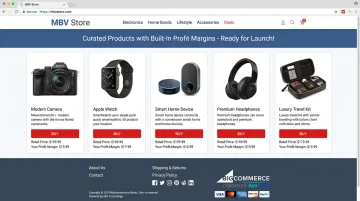
Every MBV package includes access to a curated Product Superstore of 2,500+ items, plus a live product feed drawing from over 1 million products total. That catalog already spans:
- Electronics
- Pet items
- Bath and body
- Home and office goods
- Gifts and holiday products
This overlaps directly with the profitable niches covered above, so you're not vetting individual suppliers from scratch.
What comes bundled into every MBV store:
- Built-in profit margins of 35%-200% on most products
- Free shipping on all storefront orders
- A branded, SSL-secured storefront you can launch in days rather than months of testing
- One-on-one business consulting and MBV University training included at every package tier
Rather than guessing which niche will work, MBV clients get guidance from consultants trained by strategic advisor Kevin Harrington, an original Shark Tank investor. His ventures have generated more than $6 billion in global sales, and that experience shapes the coaching every client receives.
This guidance helps you refine a niche choice instead of relying on trial and error. Client testimonials confirm the payoff: consultants like Bruce Witkin and Jason Backer routinely get client sites live in less than a week.
Conclusion
Profitable dropshipping depends less on the business model itself and more on disciplined niche selection paired with reliable execution, week after week.
Before committing, weigh margin potential against demand consistency, and be honest about how much you know about the market you're entering. A niche you understand will always outperform one you picked because it looked hot online.
If you'd rather skip months of trial and error, explore a turn-key MBV dropship store for expert-guided niche selection and a faster path from idea to launch.
Frequently Asked Questions
What are the most profitable dropshipping niches?
Pet wellness, beauty and wellness accessories, and tech accessories consistently rank among the most profitable. Profitability ultimately depends on healthy margins, steady demand, and low brand loyalty among buyers, not the category alone.
Which dropshipping niches are currently in high demand?
Pet products, wellness accessories, and sustainable home goods all show rising search volume and consumer spend. Each benefits from routine-driven repeat purchases rather than one-time impulse buys.
How do I validate a dropshipping niche before investing?
Check search trend data over 12+ months, research existing competitors for gaps you can fill, and calculate your true margin after supplier cost, shipping, and platform fees. Skipping any of these steps raises your odds of landing on an oversaturated or low-margin niche.
Is dropshipping still profitable in 2026?
Yes, when sellers focus on specific niches with healthy margins and reliable fulfillment instead of running broad, undifferentiated stores. The model remains viable, but general "sell everything" stores struggle to compete.
How much does it cost to start a dropshipping business in a niche?
Costs vary widely depending on your approach. DIY setups can cost less upfront but require piecing together themes, apps, and suppliers yourself, while turn-key packages like MBV's $3,995–$5,995 one-time investment bundle store setup, branding, and curated products into a single launch-ready site.
Can I change my niche after launching my dropshipping store?
Pivoting is possible, since most platforms let you swap out inventory categories. However, it can cost you branding and SEO equity you've already built, so validating your niche thoroughly before launch is the smarter path.