Anyone can set up a storefront in a weekend. The real challenge starts after launch, when you realize a beautiful product catalog doesn't attract customers on its own. Without consistent, valuable content, even the best-stocked store sits quietly, waiting for traffic that never shows up.
Here's the problem most new and home-based business owners run into: they don't have the time, the writing background, or the marketing training to produce content while also managing orders, customer service, and everything else running a business demands.
This guide breaks down what content marketing actually is, how the buyer's journey works, and how to build a simple strategy around it. We'll also cover how MBV's Marketing Package folds content marketing directly into your turn-key e-commerce launch, so you're not starting from a blank page.
Key Takeaways
- Content marketing builds trust before it asks for a sale, unlike traditional advertising
- Buyers move through four stages: awareness, consideration, decision, and retention
- Consistency beats volume — a content calendar prevents the most common small-business failure
- MBV bundles branding, social integration, and consultant-led strategy into every package tier
What Is Content Marketing?
Content marketing is the strategic creation and distribution of valuable, relevant content designed to attract, engage, and retain a specific audience. It's the opposite of traditional "interruption" advertising, which pushes a message at someone whether they want it or not.
The core value exchange is simple: instead of pitching immediately, you solve a problem or answer a question first. Trust gets built. The sale comes later, as a natural next step rather than a hard sell.
A quick e-commerce example: Say you sell kitchen gadgets. A blog post titled "Best Small Kitchen Gadgets for Apartment Living" gives readers genuinely useful information. It also naturally points them toward your storefront, without ever feeling like an ad.
Common Types of Content Used by Online Sellers
Most successful small online stores don't rely on just one format. They mix two or three and repurpose each piece across multiple channels to save time. Common formats include:
- Written content — blog posts, product guides, buying comparisons
- Video — product demos, unboxings, quick how-to clips
- Social media posts — short-form updates, behind-the-scenes content
- Email newsletters — announcements, tips, exclusive offers
- Images and infographics — visual comparisons, quick-reference guides
Investment in content isn't slowing down either. In the Content Marketing Institute's 2025 benchmark survey, 46% of marketers expected their content budgets to increase, while another 41% expected them to stay the same. That means nearly nine in ten planned to maintain or grow their investment — a strong signal the tactic still works.
Why Content Marketing Matters for Small and Online Business Owners
Two reasons stand out for small sellers specifically.
First, content marketing improves organic search visibility. A new store doesn't have to rely entirely on paid ads to get found. Well-written blog posts and guides can rank in search results for months or years after publishing.
Second, content adds something a commodity or dropshipped product often lacks: personality. Anyone can sell the same phone case or kitchen tool. Brand storytelling, use-case guides, and a distinct voice are what separate your store from ten competitors selling the identical item.
Reviews prove the point. According to PowerReviews' 2023 consumer survey:
- 99.75% of online shoppers read reviews at least sometimes
- 91% read them always or regularly
- 45% wouldn't buy a product at all without reviews
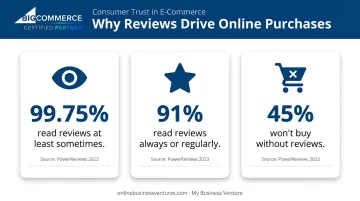
Skipping content, including basic review content, costs sales.
The 4 Stages of Content Marketing
Buyers don't wake up ready to purchase. They move through stages, and each one calls for a different type of content.
| Stage | What's Happening | Content That Fits |
|---|---|---|
| Awareness | Prospect recognizes a problem or need | Blog posts, social content, explainer videos |
| Consideration | Prospect researches possible solutions | How-to guides, comparisons, buying guides |
| Decision | Prospect chooses a specific product | Reviews, testimonials, demo videos, limited-time offers |
| Retention/Loyalty | Customer has already purchased | Follow-up emails, loyalty offers, usage tips |
That fourth stage is where most small sellers drop the ball. It's easy to focus entirely on winning a first sale and forget the customer who already bought from you.
Retention content is what turns one-time buyers into repeat customers. Simple examples include:
- A "how to get the most out of your product" email
- A thank-you discount code for the next purchase
- A follow-up message asking for feedback
MBV's marketing package builds these touchpoints in from the start, with follow-up sequences and loyalty offers set up as part of the service rather than left for a busy owner to remember. For e-commerce specifically, repeat purchases are often the difference between breaking even and turning a real profit.
How to Build a Content Marketing Strategy
A workable content strategy runs on consistency, not complexity. Follow this six-step process to build one that sticks:
- Define your customer persona. Identify their pain points, where they shop online, and what content they already consume before you write a single word.
- Map content to each funnel stage. Every blog post, video, or email should have a clear purpose (awareness, consideration, decision, or retention) and a next step for the reader.
- Set specific, measurable goals. Track organic traffic, email signups, engagement, and conversion rate, tied directly to your business objectives.
- Build a simple content calendar. Inconsistency is the number-one reason small business content efforts fail. A calendar keeps you publishing even during busy weeks.
- Distribute across owned, earned, and paid channels. Post to your blog, email list, and social accounts. Encourage reviews. Repurpose one asset: a blog post can become five social captions and one short video.
- Review performance regularly. Double down on what's working. Drop what isn't. Treat this as an ongoing process, not a one-time task.
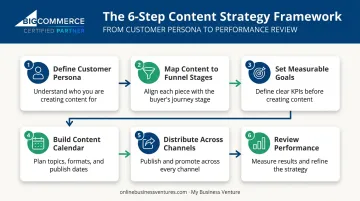
MBV's marketing package builds this process into every client site, handling calendar consistency, distribution, and performance tracking through its SEO, social media, and email marketing services.
How MBV's Marketing Package Handles Content Marketing For You
This is exactly the kind of workload MBV built its Marketing Package to absorb. MBV folds content marketing directly into the turn-key e-commerce launch, with social media integration and campaign support included from day one.
Branding that's ready to use. Every package includes custom logo design and a branded storefront, giving new owners a professional, content-ready identity without hiring a designer or figuring out fonts and colors on their own.
Guidance from people who've done it before. MBV University and one-on-one consultants walk clients through building a realistic content plan. Clients specifically credit senior consultant Jason Backer with the coaching, encouragement, and marketing strategy development he provides during onboarding. He helps brand-new owners go from uncertain to actionable within their first week.
Strategic insight from a proven operator. MBV's Strategic Advisor, Kevin Harrington, is an original Shark Tank investor whose ventures have launched more than 1,000 products and generated over $6 billion in global sales. His experience shapes how MBV trains staff and, in turn, how clients approach branding and content strategy.
Less content to create from scratch. Access to a curated catalog of 2,500+ products, complete with existing descriptions and images, means new sellers aren't stuck writing product copy from zero. That time gets redirected toward marketing instead of asset creation.
Depending on your package tier (Enterprise, Premier, or Millennium), you'll also get search engine submission and a Google Analytics dashboard. At the Millennium level, you'll also receive a Social Media Upgrade Package, where MBV helps manage your channels with regular posts and custom content.
Content Marketing Best Practices and Mistakes to Avoid
A few patterns separate the sellers who build lasting traffic from those who burn out in month two.
Prioritize consistency over volume. One well-written post per week beats five rushed ones followed by a month of silence. A content calendar prevents the sporadic publishing that causes audiences to lose trust and stop checking back.
Don't pitch too early. Readers who land on a "helpful guide" and immediately hit a hard sell disengage fast. Provide genuine value first by answering the question they actually searched for, then mention your product.
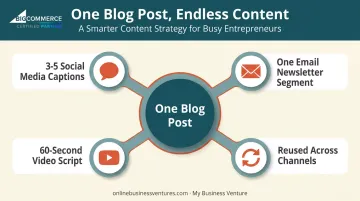
Repurpose everything. New business owners have limited hours in a day. One blog post can become:
- Three to five social media captions
- One email newsletter segment
- A 60-second video script or clip
Getting maximum mileage out of a single piece of content is one of the simplest ways to stay consistent without burning out. MBV's marketing package handles this repurposing for clients, turning each post into social captions, email content, and video scripts.
Frequently Asked Questions
What do you mean by content marketing?
Content marketing is the practice of creating and sharing valuable content, such as blog posts, videos, and guides, to attract and retain customers rather than directly advertising to them. The goal is trust first, sale second.
What are the 4 stages of content marketing?
The four stages are awareness, consideration, decision, and retention/loyalty. Each stage matches a different type of content to where the buyer is in their journey, from first noticing a problem to becoming a repeat customer.
What are the 5 C's of content marketing?
The widely cited framework is Clear, Concise, Compelling, Credible, and Call to action. Together, these five principles guide content that's easy to understand, holds attention, earns trust, and tells the reader exactly what to do next.
How much does content marketing cost for a small or home-based business?
Costs vary widely based on format, volume, and whether you outsource or DIY. Broader market ranges span from a few hundred dollars to well over $10,000 monthly for agency-level work. MBV bundles core branding and marketing tools directly into its packages to reduce that out-of-pocket burden.
How long does it take to see results from content marketing?
Content marketing compounds over time rather than delivering instant results. For organic search specifically, Semrush notes a typical window of 4 to 12 months before meaningful traffic gains show up.
Does MBV's Marketing Package include content marketing support for my online store?
Yes. Branding, social media integration, and consultant-led marketing strategy guidance are all included as part of MBV's turn-key service, scaled by package tier from Enterprise through Millennium.