Most guides walk you through the DIY route: find suppliers, build a store, learn marketing from scratch. That's fine if you have months to spare and a knack for web design. Many aspiring entrepreneurs don't.
This guide covers what dropshipping actually involves, then breaks down how a turn-key, done-for-you model like MBV's Dropship Store removes the guesswork and technical burden for first-time sellers.
TL;DR
- Dropshipping lets you sell online without holding inventory — a supplier ships directly to your customer
- Startup costs can be low, but success hinges on strong product research and reliable suppliers
- Building a store from scratch means sourcing suppliers, learning SEO/ads, and managing tech yourself
- Turn-key providers like MBV handle store setup, sourcing, and branding, letting owners launch in days
What Is Dropshipping?
Dropshipping is an ecommerce fulfillment model where you list products you don't own or store; once a customer orders, a third-party supplier ships it directly to them. Shopify defines it as retail fulfillment without upfront inventory purchases.
Your job as the seller is to run the storefront, handle marketing, and manage customer service, while a third-party supplier handles the manufacturing, warehousing, and packing.
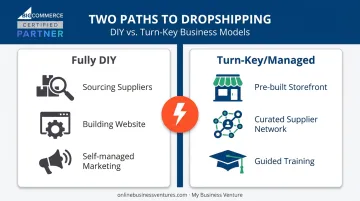
There are two broad paths:
- Fully DIY dropshipping: you source suppliers, build the site, and manage everything yourself
- Turn-key/managed dropshipping: a provider sets up the store, curates suppliers, and trains you on running it
Both models rely on the same core mechanic. The difference is who does the heavy lifting before you make your first sale.
Why Start a Dropshipping Business? (When It Makes Sense)
Dropshipping makes sense for people who want to test an online business model without the capital risk of buying inventory upfront. The global drop shipping market backs this up. It's forecast to grow from $336.29 billion in 2024 to $1.26 trillion by 2030, a 25.08% CAGR, according to a Bonafide Research report distributed by ResearchAndMarkets.
Here's why that growth matters for someone considering the leap:
- Low upfront investment compared to traditional retail, since you're not buying bulk inventory before you have a single sale
- Location independence keeps the business running anywhere you have internet access
- Product flexibility lets you test multiple niches without getting stuck with unsold stock
- Scalability means order volume doesn't require proportionally more of your time, because fulfillment isn't manual
That last point is where most people underestimate the model. A well-run dropshipping store can process 10 orders or 1,000 without the owner working 100x harder. Getting to that point, though, requires infrastructure most beginners don't have on day one.
The Hidden Challenges of DIY Dropshipping
Most first-time dropshippers underestimate how much technical and ongoing work goes into a "simple" storefront. That's a big reason many quit within months.
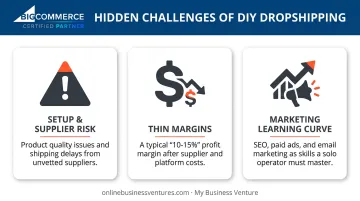
Setup and Supplier Risk
Building a store, vetting suppliers, and writing product listings can take weeks or months before anything goes live, and even after launch, supplier risk doesn't disappear:
- Quality issues surface after the sale, not before
- Shipping delays are hard to catch without direct oversight
- Stockouts happen without warning
The frustrating part? Customers blame the storefront, not the supplier, and your reputation takes the hit even when the failure happened three steps upstream.
Thin Margins and the Marketing Learning Curve
Buying single units instead of bulk raises per-unit cost. Combine that with inexperienced sellers underpricing to compete on crowded platforms, and margins get squeezed fast — Shopify notes that open-marketplace dropshippers typically see just 10-15% profit margins.
On top of that, SEO, paid ads, and email automation all have to be learned or outsourced, and both options cost time and money.
A common miss: many beginners launch without a plan for ongoing support. Then a supplier issue or technical glitch hits, and there's no one to call.
How a Turn-Key Dropship Store Removes These Barriers
MBV's Dropship Store model was built to directly address the pain points above. Instead of one person juggling sourcing, tech, and marketing alone, an established team handles the heavy lifting.
Curated catalog, no guesswork. Clients get access to a curated selection of 2,500+ top-selling products, with the ability to scale into MBV's broader network of over 1 million items from vetted manufacturers. No cold outreach to unknown suppliers, no quality-testing trial and error.
Fast, professional build. Stores go live in days, not months. Every package includes:
- Custom logo design and a branded storefront
- SSL-secured, encrypted checkout
- Mobile-optimized design built on a certified BigCommerce platform
Margins and shipping already worked out. Store owners skip the guesswork on pricing and freight negotiations, stepping into a built-in profit margin structure of 35-200% depending on product category, with free shipping included through the dropship partner.
Training that addresses the marketing gap. One-on-one coaching through MBV University, plus ongoing consulting from a dedicated business consultant, tackles the exact learning curve that trips up DIY sellers. Strategic advisor Kevin Harrington of Shark Tank shapes much of that guidance, drawing on ventures that have generated more than $6 billion in global sales.
Accountability that supplier directories don't offer. MBV has been in business for 30+ years, holds a BBB A+ rating, and operates from five U.S. offices — New York, Georgia, South Carolina, Pennsylvania, and California. That's a level of backing generic dropship marketplaces simply don't provide.
How to Launch a Dropshipping Store the Turn-Key Way
Here's what the process actually looks like when you choose a managed route instead of building from scratch.
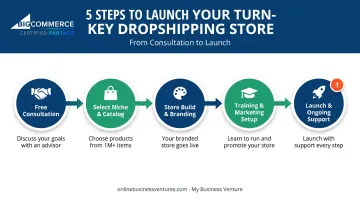
Free Consultation and Business Goals Review: A business consultant reviews your goals, budget, and interests to help determine the right product direction before you commit to anything.
Select a Niche and Product Catalog: Choose from curated categories such as electronics, pet items, gifts, and home and office products. The team helps identify items with strong margins and consistent demand, taking the guesswork out of trend-chasing.
Store Build-Out, Branding, and Technology Setup: MBV designs a custom logo and builds a fully functional, SSL-secured storefront, with one client reporting their consultant had the site "operational in less than a week."
Training and Marketing Setup: New store owners go through structured training covering social media integration, marketing campaigns, and day-to-day store management through MBV University.
Launch, Support, and Ongoing Growth: Once live, you get continued access to business consultants, real-time fraud monitoring, and 24/7 hosting support to help stabilize and scale the business over time.
Frequently Asked Questions
Is $100 enough for dropshipping?
Not by current standards. Shopify pegs a realistic first-month budget at $200-$600, and Forbes Advisor cites $200-$500. Turn-key models bundle these costs into a structured, one-time investment instead.
Do I need a business license to start a dropshipping business?
Most U.S. states require some form of business registration or a sales tax ID before you start selling. Requirements vary by state and legal structure, so check your local rules before launching.
How much money can you realistically make with dropshipping?
Earnings vary widely based on niche, supplier reliability, and marketing effort. Outcomes range from modest side income to a full-time revenue stream, depending largely on execution.
What's the difference between DIY dropshipping and a turn-key dropshipping store?
DIY requires you to source suppliers, build the site, and learn marketing alone. A turn-key store like MBV's provides a pre-built storefront, curated products, and training as part of the package.
How long does it take to launch a dropshipping store?
DIY setup can take weeks to months depending on your technical skill. Turn-key providers like MBV can have a fully functional store live within days.
Is dropshipping still profitable in 2026?
Yes, for sellers who choose the right niche, maintain reliable suppliers, and market consistently. Grand View Research forecasts $167.3 billion in U.S. dropshipping revenue for 2026, though profitability still hinges on execution.