Yet a lot of people still believe they need thousands of dollars, a warehouse full of inventory, or a physical storefront before they can call themselves business owners. That belief keeps good ideas parked in notebooks.
This guide is for stay-at-home parents squeezing in work during naptime, laid-off professionals rebuilding income, students with a skill to sell, and 9-to-5 employees who want a second income stream. We'll walk through realistic no-money business models, the exact steps to launch one, the mistakes that sink beginners, and where a turnkey partner like MBV can shortcut the hardest parts.
Key Takeaways
- Freelancing, affiliate marketing, dropshipping, and digital products all let you start for $0–$100
- Validated demand matters more than your starting budget — test before you build
- Free-tier tools now replace most of the early expenses that used to require capital
- Consistent effort over weeks to months builds steady income, not overnight luck
- For entrepreneurs ready to invest beyond $100, turnkey platforms like MBV remove the technical setup burden for product-based stores
What Starting an Online Business With No Money Really Means
What "No Money" Actually Means in Practice
"No money" doesn't mean zero cost forever. It means launching with $0 to $100, using free-tier tools and your own time or skills instead of buying inventory or equipment upfront.
You'll likely spend small amounts later (a domain name, a trial upgrade) but only after you've confirmed people actually want what you're selling. Validate first. Spend second.
Why This Approach Makes Sense Right Now
This isn't a fad. U.S. retail e-commerce sales hit $1.1926 trillion in 2024, an 8.1% increase over 2023, and now account for 16.1% of all retail sales. That's real, recurring demand, not a pandemic-era blip.
The advantage for beginners: free platforms and low barriers let you test several ideas cheaply before committing real money to any single one. You can try affiliate content this month and pivot to freelancing next month, all without sunk costs.
What to Expect Before You Start
Time, not money, is your real early investment. Among adults who did gig work in 2024, 70% spent fewer than 5 hours a week on it. Building a real online business from scratch usually demands more, often 10–20 hours weekly before you can afford to hire help.
Two different timelines exist here:
- Quick-cash gigs (freelancing, reselling): pay within days or weeks
- Build-to-scale businesses (stores, content brands): take longer to gain traction but compound over time
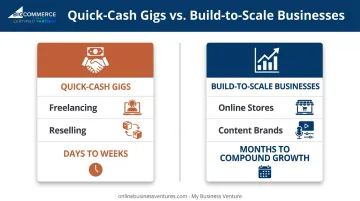
Know which one you're building before you start, so your expectations match reality.
Best Online Business Ideas You Can Start With Little or No Money
The best no-money ideas rely on time, skill, or a supplier relationship — never upfront cash. Here's what fits different situations:
- Freelancing and service work: Writing, virtual assistance, design, or social media management through Upwork or Fiverr. Near-zero entry cost; ideal if you already have a marketable skill.
- Affiliate marketing: Promote other companies' products through content or social posts and earn commissions without holding inventory. Good for content creators.
- Dropshipping and print-on-demand: Sell products with no upfront stock. A supplier ships directly to your customer after you receive payment, ideal for a real product-based brand without warehouse space.
- Digital products and content: Ebooks, courses, blogging, YouTube, or podcasting you create once and monetize repeatedly through ads, sponsorships, or affiliate links.
- Handmade or resold goods: List on free marketplaces like Etsy or Facebook Marketplace to test demand with small batches before investing more.
Of these, dropshipping is often the fastest route to a scalable, product-based brand. It's also where the model hits a ceiling for DIY beginners: sourcing reliable suppliers and building tech infrastructure alone eats up the exact time you don't have. That's the gap turnkey platforms like MBV are built to close.
How to Start an Online Business With No Money – Step by Step
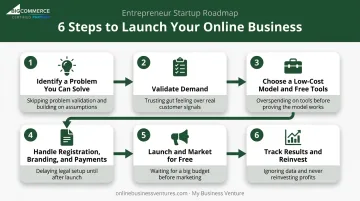
The most common mistake at this stage? Building a full store or product line before confirming anyone actually wants to buy. Follow these steps in order to avoid it.
Identify a problem you can solve with what you already have. Pinpoint a skill, hobby, or free tool you can turn into a service or content niche. Check for real demand using free keyword or forum research. Common miss: chasing a "cool idea" instead of one with proven buyer intent.
Validate demand before spending time or money. Test interest through social posts or direct conversations, then confirm demand with a simple free landing page. Look for willingness to pay, not just likes. Common trap: skipping validation and building a full offering nobody's willing to buy.
Choose a low-cost business model and free tools. Match your validated idea to freelancing, affiliate, dropshipping, or digital products, then pick free-tier tools for your website, payments, design, and hosting to build a first version. Common miss: overspending on premium tools or paid ads before any revenue exists.
Handle the basics: registration, branding, and payments. Register as a sole proprietorship where possible. The SBA notes registration typically costs less than $300 in most states. Create simple branding with a free tool like Canva, then set up payment acceptance through PayPal or Stripe. Common miss: ignoring licensing or sales tax until a customer issue forces the conversation.
Launch and market using only free channels. Use free organic tactics like social content, SEO blogging, referrals, and niche online communities to land first customers without ad spend. Common miss: relying on a single channel and quitting before organic traction builds.
Track results, reinvest, and decide when to scale. Manually track visitor traffic and conversion rate, watching for repeat customers as a sign of traction. Reinvest early profit into your highest-leverage next step. Watch for: adding costs, hires, or ad spend before your core offer and pricing are proven.
Early Decisions That Make or Break a No-Money Startup
Zero-dollar launches still carry hidden costs beyond the sticker price:
- Domain renewals: often free for the first year, then billed annually
- Transaction fees: payment processors typically take a cut per sale
- Your own time: doing everything yourself has a real opportunity cost, even if it doesn't hit a bank statement
Beyond these line-item costs, profitability itself takes time: bootstrapped businesses rarely turn a profit overnight. Federal data on U.S. startups shows the early years are genuinely tough for most small firms, regardless of funding source.
Plenty operate at a loss well into their second year before finding their footing, so set your expectations around months, not days.
Compliance is another blind spot. Beginners often skip:
- Business registration in their state
- Sales tax thresholds, which vary significantly by state: some use dollar-sales tests, others use transaction counts
- Product-specific rules, especially relevant for resale or dropshipping models where you don't control sourcing
Handling these early, even loosely, saves major headaches once your store starts generating consistent sales.
How MBV Helps You Launch a Profitable Online Store With Minimal Upfront Investment
My Business Venture didn't start as a big operation either. Founder Thomas Stridiron built the company in 1992 from a two-bedroom apartment with a $100 investment. Three decades later, MBV generates revenues in the millions and has helped thousands of entrepreneurs launch stores of their own, proof that the low-money model can scale.
For readers who've validated demand for a product-based store but don't want to spend months sourcing suppliers and building tech from scratch, MBV offers turnkey dropship packages instead. These one-time investments start at $3,995, replacing months of capital-intensive setup with a single upfront cost:
- 2,500+ curated products available at launch, drawn from a catalog of 1 million-plus items
- No inventory to buy or store: MBV's dropship partner ships directly to your customer under your brand name
- Free shipping and profit margins of 35–200%, with full pricing control
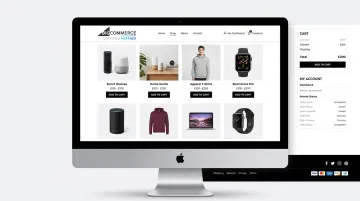
- A live, SSL-secured e-commerce store within days, built on a certified BigCommerce platform
New store owners also get one-on-one training through MBV University, led by consultants like Kurt Higgins, Bruce Witkin, and Jason Backer. This hands-on coaching cuts down the steep learning curve that usually substitutes for money in a traditional startup. MBV clients also get strategic guidance from Kevin Harrington, an original Shark Tank investor, whose insight has helped shape more than 1,000 product launches.
If you've done the validation work and you're ready for a real product-based brand, MBV is built to be the logical next step. It skips the time-consuming setup work, like sourcing suppliers and building a website, so you can focus on running the business.
Frequently Asked Questions
What is the best online business to start without money?
Service-based work, affiliate marketing, and dropshipping top the list since they require skill and time rather than upfront cash. The "best" one really depends on your existing skills and goals.
What's the best online business to start as a beginner?
Freelancing or affiliate marketing suit absolute beginners due to minimal setup. Dropshipping through a turnkey platform is also beginner-friendly if you want a product-based business without building the tech yourself.
How to make $10,000 a month on the internet?
This typically requires a validated offer, consistent customer acquisition, and reinvestment over several months, not instant results. Scaling a proven no-money model like dropshipping or content is the common path.
How much does it actually cost to start an online business?
Many models start at $0–$100 using free tools. Expect small ongoing costs later, like domain renewal or payment processing fees, as the business grows.
Can you really start dropshipping with no money?
Yes, you only pay suppliers after a customer orders. Some free trials or entry-level platform fees may apply, and turnkey options like MBV can minimize setup costs further.
How long does it take to start making money online with no investment?
Most people see initial income in 1–3 months of consistent effort. Timelines vary based on the model you choose and how quickly you validate real demand.