Costs vary wildly depending on your path. A self-built store, a supplier directory subscription, and a turn-key solution like MBV all land in very different price brackets. Misunderstanding this is exactly why so many new sellers underbudget for marketing or underprice their products right out of the gate.
This guide breaks down real startup cost ranges, the factors that push pricing up or down, how to set product prices that protect your margin, and how a turn-key model changes the entire cost equation.
Key Takeaways
- DIY dropshipping starts under $500, though realistic first-month costs often reach $200-$1,000+ before ad spend
- Turn-key packages (like MBV's) bundle store build, catalog access, branding, and training into one $3,995-$5,995 one-time investment
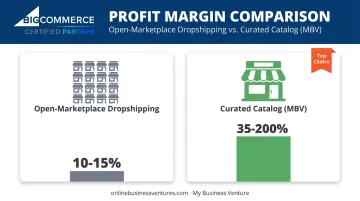
- Open-marketplace dropshipping margins typically sit at 10-15%, while curated catalogs support markups of 35-200%
- Marketing, returns, and payment processing fees are the hidden costs most new sellers underbudget
- A turn-key model swaps a dozen line items for one predictable number plus a small transaction fee
How Much Does It Cost to Start a Dropshipping Business? (Pricing Overview)
There's no single price tag for starting a dropshipping business. Costs depend entirely on whether you build everything yourself or pay for a done-for-you setup.
Here's what typically goes wrong when sellers misjudge this:
- Underbudgeting for marketing because the store itself felt "cheap enough"
- Choosing unreliable suppliers to save a few dollars a month, then eating the returns
- Ignoring recurring fees like apps, payment processing, and domain renewals that add up faster than expected
Typical Cost Ranges
| Setup Type | Typical Cost | What's Usually Included |
|---|---|---|
| DIY lean setup | $200-$300 for month one | Platform fee, domain, free supplier app |
| DIY standard setup | $500-$1,500+ | Paid automation tools, verified supplier access, initial ad testing |
| Turn-key (MBV) | $3,995-$5,995 one-time | Store build, curated catalog, branding, training |
Shopify's own dropshipping cost guide pegs a realistic first month at $200 to $300, covering store setup, a domain, product samples, and a bit of initial marketing. That figure is just the starting point; it excludes sustained ad spend and paid supplier verification costs.
DIY Setup
A DIY setup means handling everything yourself, from building the store to sourcing suppliers and designing the branding. You become the developer, buyer, and marketer rolled into one.
Best for: sellers with the technical skills (or patience to learn) and the time to vet suppliers and troubleshoot a platform on their own.
Turn-Key Setup (Such as MBV)
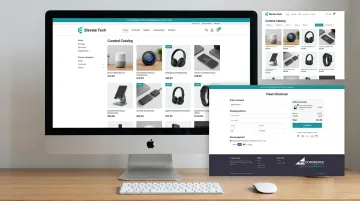
A turn-key package consolidates the pieces most DIY sellers spend weeks assembling. MBV's packages, for example, run $3,995 to $5,995 as a one-time payment and typically include:
- Launches a professional, fully branded store within days
- Provides access to a curated catalog of 2,500+ products (drawn from a pool of over 1 million)
- Includes custom logo design and a branded storefront
- Secures your cart with SSL encryption plus 24/7 hosting
- Delivers one-on-one training and business consulting
- Sets up free shipping on qualifying orders
Best for: first-time entrepreneurs who'd rather skip months of trial-and-error sourcing suppliers and building a site, and pay one predictable number instead.
Key Factors That Affect Dropshipping Costs and Profit Margins
Both your startup cost and your product pricing hinge on a handful of technical and operational decisions. Get these wrong, and even a well-designed store can bleed margin.
Product Sourcing and Supplier Access
Free directories like AliExpress require no subscription, but reliability varies by supplier. Paid, vetted platforms (SaleHoo, Worldwide Brands) charge for access precisely because they screen suppliers first. A more reliable supplier catalog also means fewer refund disputes eating into your margin.
Platform and Technology Costs
Basic Shopify runs about $29/month billed annually, plus roughly $16/year for a domain. Add a paid automation app like DSers ($19.90-$49.90/month) and the monthly bill climbs fast. A turn-key store bundles hosting, SSL security, and uptime into the package price instead of billing them separately.
Marketing and Advertising Spend
This is usually the single largest and most variable cost in dropshipping. Shopify recommends starting paid product testing at $5-$10 per day, expecting at least $100-$200 per month just to find a winning product.
MBV's packages include marketing tools and search engine submission, but paid ad spend remains the client's responsibility. Still, MBV notes that 70 of its "Top 100 Ways to Market" strategies cost nothing but time.
Shipping, Fulfillment, and Returns
Shipping costs get built into your product price one way or another, whether itemized or folded into a "free shipping" markup. Returns matter more than most new sellers realize: the National Retail Federation estimated 19.3% of online sales would be returned in 2025. Price without a returns buffer, and that percentage comes straight out of profit.
Support, Training, and Consulting
Figuring out pricing and marketing alone means learning through costly mistakes. Structured training and consulting, like the programs bundled into MBV's packages via MBV University, compress that learning curve considerably.
How to Price Your Dropshipping Products for Profit
The retail price you set determines whether your business is profitable, not just which products you choose to sell. Here are the main approaches.
Cost-plus (markup) pricing: Add your product cost plus fees together for a base cost, then apply a target markup percentage.
Example: Product cost $20 + shipping/fees $3 = $23 base cost. Apply a 60% markup → retail price of roughly $37.
Tiered markup on cost: Apply higher percentage markups to lower-cost items and lower percentages to pricier ones, since a customer notices a $5 jump on a $15 item far more than on a $150 one.
| Cost Tier | Suggested Markup |
|---|---|
| Under $15 | 100-150% |
| $15-$50 | 50-100% |
| $50+ | 25-50% |
MSRP-based pricing: Start from the manufacturer's suggested retail price, then discount slightly from it to signal value while still protecting margin.
Psychological pricing: Charm pricing (setting $99 instead of $100) and price anchoring (showing an original price beside a discounted one) both influence perceived value without changing your actual cost structure.
Where you source your products matters as much as how you calculate the markup. Curated catalogs (MBV's 2,500+ product selection is one example) can support markups from 35% to 200% because the supplier cost structure is more favorable and shipping is often already built into the fulfillment arrangement. Compare that to the 10-15% margins Shopify cites as typical for open-marketplace dropshipping, and the gap becomes clear.
DIY Dropshipping vs. Turn-Key Solutions (MBV): What's the Difference?
The real cost comparison includes more than dollars spent: time, predictability, and support all factor in.
| Factor | DIY | Turn-Key (MBV) |
|---|---|---|
| Time to launch | Weeks to months of research, supplier vetting, and building | Store live in days with pre-loaded catalog and branding |
| Total cost predictability | Spread across many vendors and tools; hard to forecast | One consolidated investment ($3,995-$5,995) plus a small merchant fee |
| Support and guidance | Self-taught, trial and error on pricing and marketing | One-on-one consulting and MBV University training included |
Industry estimates put a typical DIY launch at 7 to 21 days for product research, store setup, supplier integration, and testing, before you've made a single sale. MBV clients, by contrast, routinely go live within a week since the store, catalog, and branding are already assembled.
Budgeting Tips and Common Pricing Mistakes to Avoid
A realistic budget covers more than the upfront cost. It also leaves room for marketing spend and margin protection once the store goes live.
Before you set a budget, consider:
- Expected order volume in your first 90 days
- Realistic return rates for your product category
- How much you'll actually test in paid ads before finding a winner
- Whether you need done-for-you support or can troubleshoot alone
Common mistakes to avoid:
- Chasing the lowest upfront cost and ignoring recurring fees like transaction charges and app subscriptions
- Underpricing to compete on cost instead of differentiating through service or curation
- Skipping a returns buffer in your pricing, then getting squeezed when refund requests hit
- Assuming "free shipping" has no cost, when it's actually built into your markup somewhere
A $200 DIY store with no marketing budget and a $5,995 turn-key package with no plan for ad testing both fail for the same reason: nobody planned past the launch date.
Frequently Asked Questions
Is $500 enough to start dropshipping?
$500 can cover a bare-bones DIY setup (platform, domain, basic supplier access), but leaves almost nothing for marketing or branding. A turn-key solution requires more upfront cash but delivers a store, catalog, and training already built.
What is a good profit margin for dropshipping?
Industry-wide, open-marketplace dropshipping margins typically run 10-15%. Curated turn-key catalogs, like MBV's, can support markups as high as 35-200% depending on product category.
How much should I budget for marketing when starting a dropshipping store?
Beginners typically start paid testing at $5-$10 per day, budgeting at least $100-$200 for the first month. Organic marketing lowers cash costs but demands far more time.
Do I need to buy inventory to start dropshipping?
No. Dropshipping, including turn-key models like MBV's, eliminates upfront inventory purchases entirely. Suppliers hold the stock and handle fulfillment once a sale is made.
Is it cheaper to build my own store or use a turn-key dropshipping solution?
DIY often looks cheaper upfront, but the real cost hides in time, trial-and-error, and missing tools. Turn-key solutions consolidate those hidden costs into one predictable investment.
How quickly can I launch a dropshipping store?
DIY launches typically take 7-21 days for research, setup, and testing. Turn-key setups like MBV can go live within a week of purchase.