Part of the appeal is practical. A general store spreads revenue across groceries, household goods, and hardware instead of betting everything on one category. It can run as a physical shop, an online store, or both.
This guide walks through what starting one actually involves, based on the step-by-step framework taught in MBV University's business training curriculum.
Key Takeaways
- General stores sell diverse everyday goods, not just groceries, in physical, online, or hybrid formats
- Success hinges on validating demand, managing diverse inventory costs, and securing licenses early
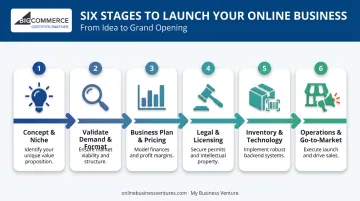
- The launch process runs through six stages: concept, demand validation, financials, legal setup, inventory/tech, and go-to-market
- Expect several months to a year before income stabilizes, depending on format and location
What Is a General Store Business?
A general store is a retail business that sells a wide range of everyday goods (groceries, household items, hardware, clothing basics, and sundries) under one roof, rather than specializing in a single category.
The value it delivers comes from convenience, not niche expertise: one stop for daily essentials instead of three or four trips across town.
The U.S. Census classifies this format under NAICS code 455219 ("All Other General Merchandise Retailers"): establishments selling a broad line of merchandise (apparel, groceries, hardware, housewares) with no single category dominating. General stores are listed as an illustrative example of this code.
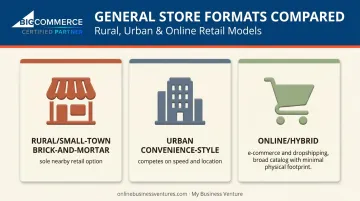
Common formats today include:
- Traditional rural/small-town brick-and-mortar stores serving as the only nearby retail option
- Urban convenience-style general stores competing on speed and location
- Online or hybrid general stores using e-commerce and dropshipping to offer a wide catalog without a large physical footprint
Under 2022 NAICS updates, the store/nonstore distinction was removed: an online seller with a broad catalog gets classified the same way as a physical one. Assortment, not channel, defines the format.
Why Start a General Store Business? (When It Makes Sense)
Starting a general store makes sense under certain conditions. It isn't a guaranteed win just because the concept sounds timeless.
Diversified Demand and Revenue
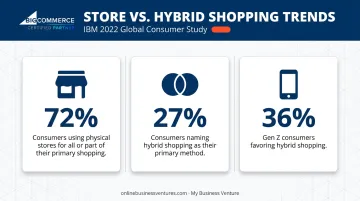
Consumers still lean on physical stores heavily. IBM's 2022 global study of over 19,000 consumers found 72% used physical stores for all or part of their primary shopping method.
Another 27% named hybrid shopping as their primary method, a figure that rises to 36% among Gen Z. That's a real signal that in-person and blended shopping habits aren't going away.
A general store also spreads risk differently than a single-category shop. A slow week in electronics can be offset by steady toy or home goods traffic. Diversification doesn't eliminate risk, but it does mean you're not depending on one supplier or one seasonal category to carry the whole business.
Differentiation Without Matching Big-Box Scale
You won't out-discount a dollar store or a supercenter. What you can offer:
- Personal service and product knowledge dollar stores don't provide
- Local curation — stocking what your specific community actually needs
- Reliability and trust built over repeat visits
These advantages build the kind of loyalty that keeps customers coming back and often follows them online.
Growth Through an Online or Hybrid Channel
Adding an e-commerce storefront extends the "something for everyone" model past your physical location's walls. It's how a small-town general store starts reaching customers well outside its zip code without opening a second location.
What to Know and Early Decisions That Matter Before You Start
Before committing capital, get honest about the workload and the decisions that trip up new owners.
What to Know Before You Start
Managing a general store means juggling several product categories at once. You'll coordinate multiple suppliers, track inventory across unrelated product types, and merchandise a store that has to make sense to a shopper browsing groceries next to hardware.
A few realistic expectations:
- Time commitment is higher early on than for a single-category shop
- Steady income typically takes several months to a year, depending on format and local competition
- Success depends more on merchandising, buying, and organizational skills than deep technical expertise in any one category
Early Decisions That Often Get Overlooked
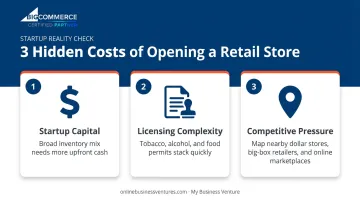
Three things new owners consistently underestimate:
- Startup capital: a broad inventory mix across food, household, and hardware requires more upfront cash than a specialty store, since you're stocking several categories at once instead of deepening one.
- Licensing complexity stacks fast if you plan to carry tobacco, alcohol, or perishable food alongside general merchandise — each category can trigger its own permit.
- Competitive pressure: map out nearby dollar stores, big-box retailers, and online marketplaces early, since underpricing to compete with them erodes margins that are already thin on essentials.
Online general-merchandise stores sidestep much of this: a dropship model, like the one MBV students build, shifts stocking and fulfillment to a third-party partner.
How to Start a General Store Business – Step by Step
The launch process breaks down into six practical stages. Before diving in, know the three mistakes that derail most new general stores:
- Rushing to open before validating local or online demand
- Underpricing essentials to compete with big-box retailers
- Stocking too many categories before the core offering is stable
Step 1 – Define Your Concept, Niche, and Target Customers
Start with the problem you're solving: usually the lack of a nearby one-stop shop for daily essentials. Then identify who you're solving it for: rural households, urban neighborhood residents, commuters, or a broader online audience.
Decide the store's leaning early:
- Groceries-first general store
- Hardware-and-household-first general store
- Balanced mix across categories
This decision shapes your supplier relationships, pricing, and layout from day one.
Step 2 – Validate Demand and Choose Your Format
Research who's already serving your target customer, including nearby big-box, dollar, and convenience stores, or existing online sellers in the same space.
Decide early whether you're going physical-only, online-only, or hybrid. This single decision changes your entire cost structure and technology needs.
Before committing real capital, test willingness to pay:
- Run informal surveys with your target customer base
- Build a small social media following first
- Launch a small pilot assortment before the full store
Step 3 – Build Your Business Plan, Budget, and Pricing
Outline startup costs across every category: lease or online platform setup, initial inventory spanning multiple product types, fixtures, and licensing. Because a general store's inventory breadth is wider than a specialty shop's, these costs add up faster than most new owners expect.
Set a pricing strategy that:
- Keeps essentials competitive with nearby big-box and dollar stores
- Protects margin on specialty or convenience items
- Accounts for different inventory turn rates, since fast-moving groceries turn over much faster than slower-moving hardware or seasonal goods
Build cash-flow projections around those turn-rate differences, not a single blended assumption.
Step 4 – Handle Legal Setup, Licensing, and Insurance
Register a business structure, such as a sole proprietorship or LLC, based on your liability exposure.
Then work through the permit stack:
- General business license and sales tax registration
- Food handling permits if selling perishables
- Tobacco licensing, which requires photo ID checks for anyone who appears under age 27, per FDA guidance
- Alcohol licensing, which requires a state liquor license and may involve additional local permits depending on your location
Secure business insurance covering inventory, general liability, and property before you open the doors.
Step 5 – Source Inventory and Select the Right Technology
Build supplier relationships across your store's core categories, and negotiate minimum order quantities and payment terms before you commit to a full opening inventory.
Your POS and inventory system needs to track a diverse SKU mix accurately, in real time. This is where a lot of general stores lose money quietly through shrinkage or overordering.
For owners looking to launch or extend a general store online without holding large amounts of physical inventory, turnkey e-commerce platforms can bridge that gap.
MBV's dropship-powered storefronts, for example, come pre-loaded with 2,500+ curated products and access to a catalog of 1 million or more items across categories like electronics, home and office goods, gifts, and seasonal products, with no stocking required on the owner's end.
Products ship directly to the customer under the store's own branding. Profit margins across the catalog typically run 35% to 200%.
Step 6 – Set Up Operations, Staffing, and Go-to-Market
Plan for cross-trained staff. General stores rarely have the volume early on to justify category specialists, so employees need to move between departments comfortably.
Finalize your layout or online storefront navigation so customers find what they need without friction. Then launch go-to-market efforts combining:
- Local community outreach, including word of mouth and local advertising
- A basic digital presence, such as a Google Business Profile and social media accounts
- For online/hybrid stores, SEO and email marketing to build repeat traffic
MBV University's training curriculum walks new owners through this exact sequence, from setting up a branded storefront to structuring a marketing plan with a business consultant, so the go-to-market phase doesn't become an afterthought.
Conclusion
Starting a general store comes down to the fundamentals: validate demand, plan your finances realistically, and build compliant, efficient operations — not rush to open.
What matters more than speed is what happens after launch. Reviewing pricing, adjusting your category mix, and testing new channels over time separates stores that stabilize from ones that stall. Resources like MBV University's training and consulting exist specifically to help new owners avoid the early mistakes covered in this guide.
Frequently Asked Questions
How do I start a general store business?
Define your concept and target customers, validate demand, build a financial and legal foundation, then set up inventory, technology, and marketing before launch. Each stage builds on the one before it.
What are the key components of a general store business plan?
Include an executive summary, market and competitor analysis, product/inventory plan, operations and staffing plan, marketing strategy, and financial projections. Skipping any one of these tends to surface as a costly gap later.
What is the 3-3-3 rule for stocking groceries in a general store?
There's no single authoritative retail standard by this name. It's sometimes used informally to describe balancing fast, medium, and slow-moving items so shelf space isn't tied up in slow sellers. Treat it as a guideline, not a fixed rule.
How much does it cost to open a general store?
Costs vary widely by format (physical, online, or hybrid), plus location and inventory breadth. Budget separately for lease or platform setup, inventory, licensing, and technology rather than expecting one blended number.
What's the difference between a general store and a grocery or convenience store?
A general store carries a broad mix of food and non-food items. A grocery store focuses primarily on food, and a convenience store carries a limited, fast-turn selection like snacks and drinks.
Can a general store be run online instead of as a physical shop?
Yes. Many entrepreneurs now launch general stores as online or hybrid businesses. Dropshipping platforms let owners sell without managing inventory or shipping, though margins and supplier dependence are trade-offs worth planning around.