Side-hustlers, first-time business owners, and career-changers are drawn to no-inventory models for similar reasons — lower entry costs, no storage headaches, and room to test a product idea before betting real money on it.
This guide covers the business models available, what launching one actually looks like week to week, and a step-by-step path to get started — including a faster, done-for-you route for entrepreneurs who'd rather skip the technical setup and let a partner like MBV build the store for them.
Key Takeaways
- Launch inventory-free with dropshipping, print-on-demand, affiliate marketing, or digital products.
- Startup costs range from $0 for affiliate/digital models to a few hundred for dropship or POD.
- A basic store can launch in days; steady revenue takes months of marketing.
- DIY setups take longer for supplier research; turnkey providers launch you in under a week.
What Is an Online Store Without Inventory?
A no-inventory online store is an ecommerce business where you sell products, but never purchase, store, or ship the stock yourself. A manufacturer, supplier, or platform partner handles fulfillment behind the scenes.
Your job shifts entirely to the front end of the business:
- Product curation: choosing what to sell and how to present it
- Pricing and margins: setting prices that still leave room for profit after supplier fees
- Marketing: driving traffic through SEO, social media, or paid ads
- Customer experience: handling questions, reviews, and support
How hands-on you are with that front-end work depends on where you land on a spectrum. On one end, fully DIY entrepreneurs source their own suppliers, build their own Shopify or WooCommerce site, and troubleshoot every technical hiccup solo.
On the other end, a managed or turnkey setup like MBV's model hands you a branded store pre-loaded with thousands of curated products, so you start closer to launch day than square one.
Popular Business Models for Selling Online Without Inventory
There's no single "right" model here. The best fit depends on your budget, available time, and marketing comfort level. Most beginners compare two or three options before committing to one.
Dropshipping
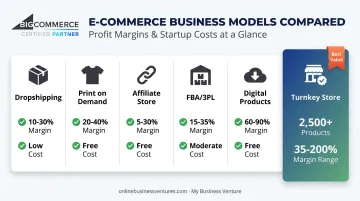
In dropshipping, you list products on your store, and a supplier ships them directly to customers when a sale happens. You never touch the item. Shopify reports typical profit margins of 10% to 15% for stores sourcing from open marketplaces: thin, but workable at volume.
The catch: you're relying on someone else's shipping timelines and often juggling multiple supplier relationships, which can create inconsistent delivery experiences for customers.
Print on Demand (POD)
POD lets you sell custom-designed merchandise (t-shirts, mugs, phone cases) that gets printed only after a customer orders it. It suits design-minded beginners who don't want to guess at demand upfront.
The U.S. POD market is forecast to hit $10.66 billion by 2030, growing at a 24.4% CAGR from 2023. That growth comes with a downside: increasing saturation, especially in generic niches like inspirational quote apparel.
Affiliate Store
Here, you promote other companies' products and earn a commission on sales, typically 3% to 7% of the sale price. This model appeals to people with an existing audience (a blog, YouTube channel, or social following) since traffic is the main asset that makes it work.
The trade-off is a lower profit ceiling. You don't control pricing, inventory, or the customer relationship; the merchant does.
Fulfillment by Amazon (FBA) and Third-Party Logistics (3PL)
FBA and 3PL let you outsource the physical work of fulfillment (storage, picking, packing, shipping) to Amazon or a logistics partner. Technically, though, you still own the inventory; you're just not handling it day to day.
These options suit sellers who are already established or moving higher-ticket items where owning stock briefly makes financial sense.
Digital Products and Services
Ebooks, online courses, templates, and tutoring sessions fall into this category. Once created, they can be sold repeatedly with no reprinting or shipping cost attached.
U.S. ebook revenue alone reached $2.1 billion in 2024. Margins tend to run higher here because there's no physical fulfillment eating into profit, though creation time and marketing costs still apply.
A Turnkey, Fully-Built Alternative
Instead of piecing together a platform, a supplier, and design work on your own, some entrepreneurs choose a managed dropship setup.
MBV's turnkey e-commerce packages, for example, build a branded, SSL-secured store on BigCommerce and preload it with a curated catalog of 2,500+ products (with access to over a million more). Stores can launch in days, training included.
Why Starting Now Makes Sense (And What to Expect)
Online shopping has become a routine habit for most consumers. That weekly-purchase behavior mentioned earlier means demand already exists, so you're not trying to convince people to shop online for the first time.
No-inventory models also let you test products with minimal financial risk. If a product line doesn't sell, you haven't sunk money into unsold stock sitting in a garage.
You also retain control over pricing and margins since you're not locked into supplier contracts for physical goods. Margins vary by model: MBV's turnkey stores list products with margins from 35% to 200%, while typical dropshipping setups often run closer to 10-15%, depending on the niche.
Set realistic expectations, though:
- Early stage: Expect real hours spent on niche research, supplier vetting, and initial marketing setup.
- Timeline to revenue: Most no-inventory stores take months, not days, to build consistent sales — a working storefront isn't the same as a profitable one.
- Skills that matter most: Marketing and customer service carry more weight than technical or sourcing expertise, regardless of which model you pick.
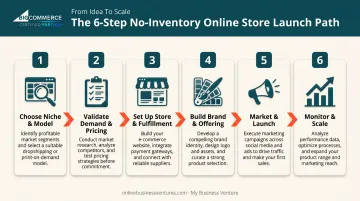
How to Start an Online Store Without Inventory – Step by Step
This breaks the launch into practical stages. Two mistakes trip up most beginners: skipping demand validation before building, and underpricing just to compete on cost.
Step 1 – Choose Your Niche and Business Model
Pick a niche with clear, recurring demand, not just something you personally like. Match your model (dropship, POD, affiliate, digital) to your budget and skillset. Free tools like Google Trends help sanity-check whether interest in a niche is rising, flat, or declining before you commit time or money.
Step 2 – Validate Demand and Pricing
Before fully building the store, test whether people will actually pay. Run a small ad campaign, collect pre-orders, or gauge interest through social posts. While you're at it, factor in supplier and platform fees: a product that looks profitable on paper can lose its margin fast once processing fees stack up.
Step 3 – Set Up Your Store and Fulfillment Partner
Choose a platform (Shopify, BigCommerce, WooCommerce) or a marketplace, then connect a supplier, print provider, or fulfillment partner. This is the stage where DIY entrepreneurs often spend weeks on technical setup alone.
Entrepreneurs who'd rather skip that grind can use a turnkey provider like MBV, which builds a branded, mobile-optimized store with a curated catalog and secure checkout in days rather than weeks.
MBV's packages run from $3,995 to $5,995 as one-time investments. Every store includes:
- SSL encryption for secure checkout
- Fraud prevention monitoring
- Merchant account setup (processing fees of 2.19% + $0.20 per transaction, plus a $15.95 monthly account fee, apply separately)
Step 4 – Build Your Brand and Define Your Offering
Create a logo, write clear product descriptions, and set policies around shipping times and returns. Since you're relying on third-party fulfillment, customers need to know upfront what to expect. Vague timelines lead to complaints later.
Step 5 – Market and Launch
Combine SEO, email, and social media to drive your first wave of traffic. Set up basic analytics tracking early so you can see what's actually converting, not just what's getting clicks.
Step 6 – Monitor, Optimize, and Scale
Track sales, customer feedback, and margins on a regular schedule. Fix pricing or supplier issues as they surface — don't wait until you're trying to scale to notice something's broken.
Common Mistakes to Avoid
- Underestimating cumulative fees: Payment processing, platform subscriptions, and supplier charges each take a small bite, and stacked together, they erode margins that looked healthy at first glance.
- Picking an oversaturated niche without differentiation: Generic POD niches, like basic quote t-shirts, face intense competition, and without a unique angle, you're competing on price alone.
- Failing to communicate shipping timelines upfront: Third-party fulfillment means delivery windows aren't always instant, and customers left in the dark often leave frustrated reviews.
Frequently Asked Questions
Can I really start an online store without buying inventory first?
Yes. Models like dropshipping, print-on-demand, affiliate stores, and digital products all let you sell without holding stock. Some providers, including MBV, offer fully-built no-inventory stores for an even faster start.
How much money do I need to start an online store without inventory?
Costs range from nearly free for affiliate or digital products to a few hundred dollars for platform fees and POD samples — far less than traditional inventory-based retail requires.
Which no-inventory business model is easiest for beginners?
Dropshipping and print-on-demand are the most beginner-friendly thanks to low upfront costs and straightforward setup. Managed or turnkey options reduce the learning curve even further.
Is dropshipping still profitable in 2026?
It can be, though margins have tightened due to competition. Profitability comes down to niche selection, marketing execution, and keeping supplier costs under control.
How long does it take to launch an online store without inventory?
A basic store can go live within days to a couple of weeks. Building steady, meaningful revenue on top of that typically takes longer.
Do I need technical or design skills to start a no-inventory store?
Basic skills help but aren't mandatory. Many platforms, and managed services like MBV, handle store design, hosting, and catalog setup on your behalf.