The people driving this shift aren't one type. Laid-off professionals are replacing lost paychecks. Parents want flexible hours around school pickups. Retirees are stretching fixed incomes. Side-hustlers who've been selling on weekends are ready to make it official.
This guide walks through what actually goes into building a home business that lasts: the validation, the legal basics, the pricing, and the launch. For readers who want to skip the trial and error, we'll also show how a turnkey platform like MBV can shortcut the technical and sourcing work entirely.
Key Takeaways
- A home business is a structured, ongoing operation, not a one-off gig or occasional side hustle
- Validating demand and setting realistic income timelines matter more than the idea itself
- Common paths: service-based, product-based (e-commerce/dropshipping), and digital/content businesses
- Turnkey platforms like MBV can shortcut sourcing and tech setup for product-based businesses
What Is a Home Business?
A home business is any income-generating operation run primarily from a home address, where the owner handles day-to-day management rather than picking up occasional tasks. That distinction matters more than it sounds.
Side hustle vs. home business
A side hustle is usually irregular: freelance gigs picked up when time allows, a few sales here and there, income that stops the moment you stop working. A home business is different. It's systemized, has growth intent, and keeps running even when you're not actively hustling every hour.
Most home businesses fall into one of three formats:
- Service-led — freelancing, consulting, coaching, or specialized skills sold directly to clients
- Product-led — e-commerce, dropshipping, or handmade goods sold through an online store
- Digital/content-led — online courses, content creation, or subscription-based digital products
Service businesses often need the least upfront cash but the most hands-on time. Product businesses need more planning around sourcing and fulfillment but can scale faster once systems are in place. MBV's turn-key dropship packages remove most of that sourcing work upfront, syncing a partner's product catalog into your store instead of requiring you to stock inventory yourself. Digital businesses sit somewhere in between, front-loaded with content creation before income becomes more passive.
Knowing which format fits your skills, budget, and available time is the first real decision. Plenty of new business owners skip it, picking based on interest alone.
Why Start a Home Business Now (When It Makes Sense)
Starting a home business isn't automatically smart just because the barrier to entry is lower than ever. It makes sense under specific conditions: real demand for what you're selling, low enough overhead to survive slow months, and a plan for scaling past your own hours.
Most people who meet those conditions still never make the leap; they stay stuck at side-hustle status.
Side hustles are common, but fewer people have one
In 2025, 27% of U.S. adults reported having a side hustle, down from 36% the year before, according to Bankrate's 2025 side hustle survey. Of those, only 16% said they wanted the work to eventually become their main income. That gap between having a side hustle and building a real business is where most people get stuck, and where a structured approach pays off.
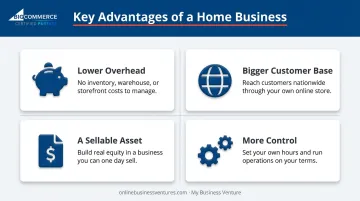
Where home businesses have a real edge:
- Lower overhead: no lease, no utilities for a separate space, no commute, so savings go straight into inventory or marketing
- A bigger customer base: e-commerce and online marketplaces mean your customer could be three states away, not just whoever drives past a storefront
- A sellable asset, not just income: a gig stops paying the moment you stop showing up, while a home business with real branding and systems can eventually be sold or handed off
- More control: you set your own pricing and hours, with turnkey platforms now handling much of the technical work that used to require hiring developers
None of this means a home business runs itself. It means the structural advantages exist now in a way they didn't a decade ago: cheaper technology and established fulfillment networks, plus customers who already trust buying from small, independent online stores.
What to Know Before You Start a Home Business
Setting Realistic Expectations
Most beginners underestimate how much time the first few months take. There's no universal timeline for when a home business starts generating consistent monthly income; it depends on your model, pricing, and how quickly you validate demand. Treat the early period as a testing phase, not a payday.
Some businesses need constant hands-on involvement. Custom crafts, one-on-one consulting, and most service work fall here, since you're the product, at least at first. Others can be partially automated or outsourced almost immediately. MBV's dropship-powered e-commerce stores work this way: a third-party partner handles fulfillment, so you're not personally packing and shipping every order.
That difference matters when setting expectations. Chasing quick income is a different goal than building toward steady, scalable revenue. The businesses that last are typically built for the second goal from day one.
Early Decisions That Matter
A handful of decisions made in the first few weeks tend to determine whether a home business survives its first year:
- Map your real startup costs. Equipment, software, and marketing spend add up quickly, so the SBA recommends budgeting for a full year of recurring expenses, not just setup costs
- Check legal and compliance basics before launch. Business registration, home occupation permits, and licensing requirements vary by city and state
- Research competitor pricing before locking in your rates. Underpricing to win early customers boxes you into a margin you can't sustain later
- Plan for founder dependency to fade. Doing everything yourself early on is normal, but map out how tools, support, or partners can offload tasks as you grow
Skipping any one of these doesn't sink a business immediately. But they compound. A business that underprices, ignores permits, and never plans past founder dependency usually hits a wall right when revenue should be climbing.
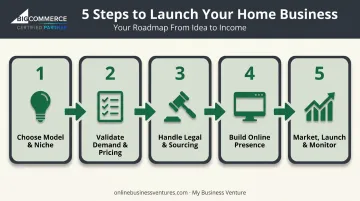
How to Start a Home Business – Step by Step
The most common mistakes happen early: skipping validation, underpricing to chase first sales, or trying to scale before the basics are stable.
Step 1: Choose Your Business Model and Niche
Match your skills, budget, and available time against the three formats: service, product, or digital, instead of picking based on passion alone. A niche you love with no validated demand isn't a business yet. It's a hobby with a price tag.
Step 2: Validate Demand and Pricing
Test real demand before committing further:
- Run small pre-sales to gauge real buyer interest
- Have direct conversations with potential customers about the offer
- Launch a limited product run to see what actually sells
Then sanity-check your pricing against your actual costs, time, and realistic margins, not just what competitors seem to charge.
Step 3: Handle the Legal, Financial, and Sourcing Basics
Register the business, secure any required home-business permits, and open a separate business bank account from day one.
For product-based businesses, this is also where you decide: hold your own inventory, or use a dropshipping/turnkey model that removes sourcing, warehousing, and fulfillment work entirely. MBV's platform, for example, connects clients to a dropship partner that picks, packs, and ships products under the client's own brand.
Step 4: Build Your Online Presence and Offering
Set up a professional, secure website or storefront with a clear scope of what's included in your product or service. Secure payment processing and consistent branding build the trust of a customer who's never met you in person.
Step 5: Market, Launch, and Monitor Performance
Focus on one or two marketing channels suited to your audience, whether SEO, social media, or a relevant marketplace, instead of spreading effort across five platforms at once. Set up basic tracking for sales, traffic, and feedback from day one, and use that data to stabilize the business before scaling further.
Why Start Your Home Business with MBV
Everything above (validation, legal basics, pricing, sourcing, fulfillment) is exactly the work MBV was built to shortcut for people who want a product-based home business without building the technical and sourcing infrastructure from scratch.
A business with a track record behind it
MBV has operated since 1992, is a BBB A+ Accredited Business, and is registered with Dun & Bradstreet. Kevin Harrington, an original Shark Tank investor whose ventures have launched over 1,000 products and generated more than $6 billion in global sales, serves as MBV's Strategic Advisor.
What's actually included
MBV builds a professional e-commerce store on BigCommerce (MBV is a certified BigCommerce Developer) and typically gets it live within days:
- Access to 2,500+ curated, top-selling products at launch, with a full catalog of over 1 million products to expand into
- No inventory to buy or store, since products ship directly from MBV's dropship partner under the client's own brand
- Free shipping included, with profit margins ranging from 35% to 200% depending on the product
- Custom logo design, secure payment processing, and SSL-encrypted checkout built in from day one
Support that addresses the mistakes covered earlier
This guide flagged founder dependency and skipped validation as common early failure points. MBV's support model is built around reducing exactly that:
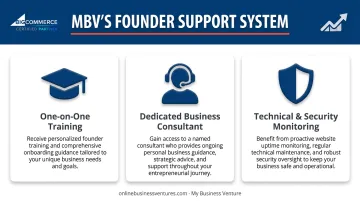
- One-on-one training through MBV University, with dedicated coaches walking new owners through the platform
- A dedicated business consultant assigned to each client for marketing strategy and ongoing questions
- Real-time fraud prevention monitoring and 24/7 site uptime, so a technical issue doesn't cost a sale
That level of support carries through to pricing: packages run as a one-time investment rather than a recurring subscription, with tiers from $3,995 to $5,995 depending on training level, marketing tools, and product access.
If you're ready to start a home business without doing the sourcing and technical setup alone, call MBV at 1-800-639-6644 for a consultation.
Frequently Asked Questions
How can I make $10,000 a month from a home business?
Reaching that level typically requires a scalable model, like e-commerce with strong margins, paired with consistent marketing and reinvesting early profits into growth. One-off gig income rarely gets there since it stops the moment you stop working.
What business makes the most money from home?
E-commerce, consulting, and specialized digital services tend to have the highest income ceilings because they scale beyond your personal hours. A turnkey e-commerce model, like MBV's, gives product-based businesses that same scalability without building the backend yourself.
Is dropshipping a good home business to start?
Dropshipping offers low upfront inventory cost and a fast launch, since you're not buying stock before you have a customer. Using an established, supported platform like MBV's helps you avoid the sourcing and fulfillment pitfalls that trip up first-time dropshippers.
How much does it cost to start a home business?
Costs vary widely by model. A service-based business might launch for a few hundred dollars, while product-based businesses typically cost more upfront. MBV's turnkey packages, for example, start around $3,995 and bundle in the technical setup costs you'd otherwise pay a developer separately.
Do I need a business license to work from home?
It depends on your city, state, and business activity, so there's no universal answer. Check local home occupation permit rules before you launch, since working from home doesn't automatically exempt you from zoning or licensing requirements.
How long does it take for a home business to become profitable?
Timelines vary by model: service-based businesses often see income sooner, while product-based businesses need more upfront validation. Ready-made platforms like MBV's can shorten that runway by removing the technical build-out phase entirely.