Here's the catch: most beginners never see that growth curve up close. They spend weeks buried in niche research, chasing suppliers who won't return emails, and tinkering with a half-built website before making a single sale.
This guide breaks down how dropshipping actually works, compares the DIY route to turn-key models like MBV's, and gives you a realistic, step-by-step roadmap to launch.
Key Takeaways
- Dropshipping removes inventory costs, letting you sell products without ever touching them
- Two paths exist: build it yourself, or launch turn-key with store, products, and training included
- Turn-key catalogs like MBV's offer 35–200% profit margins, above typical marketplace averages
- Marketing consistency and supplier reliability matter more than which platform you pick
What Is Dropshipping and How Does It Work?
Dropshipping is a retail fulfillment method where you sell products without holding any stock yourself. When a customer places an order, you forward the details to a supplier, who ships the product directly to the buyer's door, according to Shopify.
The transaction flow is simple:
- Customer places an order on your online store
- You forward the order to your supplier
- Supplier packages and ships the product directly to the customer
- You handle customer communication — questions, tracking updates, returns
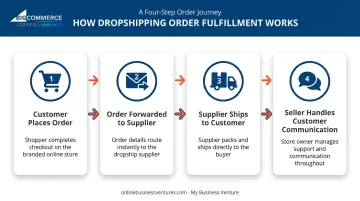
You never see or store the product. Your supplier handles sourcing and fulfillment, while you own the storefront, marketing, and customer relationship.
Benefits and Challenges of Dropshipping
Benefits include:
- No inventory investment — you're not paying upfront for stock that might not sell
- Location independence — run the business from anywhere with an internet connection
- Easy scalability — adding new products doesn't require new warehouse space
- Low-risk testing — try new niches or products without committing capital to unsold inventory
Common challenges include:
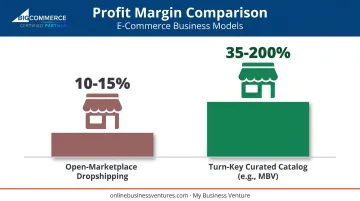
- Thinner margins — open-marketplace dropshipping typically nets 10% to 15% profit margins, per Shopify, since suppliers charge fulfillment fees
- Limited quality control — you never physically inspect the product before it reaches your customer
- Heavy competition — many sellers source from the same overseas suppliers, driving prices down
- Longer shipping windows — international fulfillment can frustrate customers expecting fast delivery
These challenges are manageable with the right planning, and they explain why your choice of business model matters as much as your choice of products.
DIY Dropshipping vs. Turn-Key Dropshipping: Which Path Is Right for You?
Traditional DIY dropshipping puts every task on your shoulders. You research the niche, vet suppliers one by one, build the website, design branding, and configure marketing, often stretching across weeks to months before your first sale.
A turn-key model flips that timeline. Providers like MBV build and launch a professional store pre-loaded with curated, vetted products, custom branding, and training, cutting launch time down to days, not months.
The Supplier-Vetting Problem
Finding a trustworthy supplier is consistently one of the toughest hurdles new dropshippers face. BigCommerce's guide to dropshipping companies notes that supplier selection directly affects your profit margins, customer experience, and brand reputation, meaning a bad choice here ripples through your entire business.
Turn-key models solve this differently. Instead of vetting suppliers yourself, you inherit pre-vetted manufacturer relationships. MBV's XML technology, for example, keeps the product catalog synced in real time:
- Automatically adds new arrivals as they become available
- Removes out-of-stock or discontinued items instantly
- Syncs directly with warehouse inventory levels
That's a task most DIY sellers handle manually, checking supplier stock and updating listings by hand.
The Honest Trade-Off
Solving the supplier problem is only part of the equation; cost and risk separate these two paths just as much.
DIY dropshipping is technically free to start. But it demands time, technical skill, and carries real risk of costly early mistakes: a broken supplier relationship or a poorly configured payment gateway can stall momentum for weeks.
Turn-key solutions require a service investment upfront, typically $3,995 to $5,995 as a one-time payment. In exchange, you skip the trial-and-error phase entirely.
How to Start Dropshipping as a Beginner: Step-by-Step
Whether you go DIY or turn-key, the fundamental building blocks stay the same. Here's the roadmap.
Step 1–2: Choose a Niche and Research Products
Before committing to a niche, research actual demand:
- Use Google Trends to compare product ideas, spot seasonality, and check geographic interest
- Check marketplace bestseller lists on Amazon or eBay's Product Research tool to see what's actually selling
- Avoid oversaturated categories; validate demand with small test orders or research tools before scaling
Google itself notes that Trends data isn't a scientific poll and doesn't show absolute search volume, so treat it as a directional signal, not gospel, per Google's own guidance on interpreting Trends data.
Step 3: Find a Reliable Supplier (or Skip This Step Entirely)
For independent suppliers, vet based on:
- Location and typical shipping times
- Minimum order requirements
- Customer reviews and reputation
- Platform integration with your chosen ecommerce tool
Or skip this altogether. MBV pairs entrepreneurs directly with a pre-vetted catalog of 2,500+ curated products, with access to over 1 million total items from brand-name manufacturers, eliminating cold-emailing suppliers altogether. A supplier requiring minimum orders of 500 units, for instance, can strain a first-time seller's budget, something worth confirming before signing on.
Step 4–5: Build Your Store and Launch
DIY builders need to select an ecommerce platform, design the site, write product descriptions, and configure payment processing themselves. That process alone can take weeks.
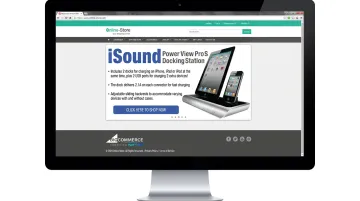
Turn-key solutions skip the manual build entirely. MBV provides a professionally designed, SSL-secured, branded store, complete with custom logo, domain registration, merchant account setup, and social media integration, that can go live in days. Consultants have gotten client sites operational in less than a week.
Step 6: Market Your Store
A store without traffic doesn't sell. Core channels include:
- SEO and search engine submission
- Social media presence and content
- Email marketing through newsletters or campaigns
- Paid ads for faster traction
A modest $200 monthly ad budget, for example, can reveal which channel converts best before scaling spend further. Ongoing marketing support, not just the initial build, tends to be the real differentiator between stores that grow and those that stall.
What's Included in a Turn-Key MBV Dropship Store
MBV has operated since 1992, bringing over 30 years of e-commerce experience, and works with strategic advisor Kevin Harrington, an original Shark from Shark Tank. The company builds a fully operational store in days, not months.
Core inclusions across MBV's packages:
- Access to 2,500+ curated products, backed by a full catalog of 1 million+ items
- Custom logo design and branded storefront
- Free shipping setup on eligible orders
- SSL-secured, encrypted checkout
- Real-time fraud monitoring, with loss coverage if fraud slips through
- 24/7 hosted uptime on secure, redundant servers
Training is handled one-on-one through MBV University, paired with ongoing consultant support. Client feedback reflects the impact:
- Tris T.: consultant Bruce Witkin got the site "operational in less than a week"
- Gilbert K.: consultant Jason Backer "immediately got my website up and running"
MBV also backs its pricing with a Low Price Guarantee: if a shopper finds a lower price elsewhere, MBV beats it by an additional 10% off the item cost. Combined with built-in wholesale pricing, this supports profit margins ranging from 35% to 200% on most products, well above the thinner margins typical of standard overseas-supplier DIY dropshipping.
Common Beginner Mistakes to Avoid
Even with the right tools, beginners trip over a few predictable pitfalls.
- Assuming "no inventory" means "no risk": Time and marketing effort are real costs, even without upfront stock investment.
- Relying on a single unvetted supplier: One unreliable source can tank your customer reviews fast.
- Entering an oversaturated niche without differentiation: Branding, customer service, and unique product descriptions still matter.
- Setting unrealistic profitability timelines: Expecting overnight profits leads to premature quitting. Track sales data and adjust instead.
None of these mistakes are fatal, but they do add friction. A turn-key package with vetted suppliers already in place, like MBV's dropship model, helps you sidestep several of these risks from day one.
Frequently Asked Questions
How do I start dropshipping as a beginner?
Pick a niche, choose a supplier or turn-key provider, build your store, then start marketing. A turn-key store like MBV's can compress this entire process into days instead of months.
Is dropshipping profitable for beginners?
Open-marketplace dropshipping typically nets 10–15% margins. Curated turn-key catalogs like MBV's can offer 35–200% margins thanks to pre-negotiated wholesale pricing.
How much does it cost to start a dropshipping business?
A lean DIY setup runs roughly $200 to $600 per month, according to Shopify. Turn-key programs like MBV involve a one-time investment, typically $3,995 to $5,995, covering the store build, products, training, and ongoing support.
Is dropshipping legal?
Yes. Dropshipping is legal in the U.S. as long as you comply with consumer protection rules, tax obligations, and supplier agreements, per FTC guidance.
What is the difference between dropshipping and a turn-key dropshipping store?
Standard dropshipping requires you to build everything yourself — niche research, supplier vetting, site design. A turn-key store is done-for-you: a provider supplies the platform, curated products, and training from day one.
How long does it take to launch a dropshipping store?
DIY builds typically take weeks to months. Turn-key stores, like those built by MBV, can go live in as few as five to seven days.